Author: azeeadmin

05 Feb 2019

Google’s still not sharing cloud revenue

Google has shared its cloud revenue exactly once over the last several years. Silence tends to lead to speculation to fill the information vacuum. Luckily there are some analyst firms who try to fill the void, and it looks like Google’s cloud business is actually trending in the right direction, even if they aren’t willing to tell us an exact number.

When Google last reported its cloud revenue, last year about this time, they indicated they had earned $1 billion in revenue for the quarter, which included Google Cloud Platform and G Suite combined. Diane Greene, who was head of Google Cloud at the time, called it an “elite business.” but in reality it was pretty small potatoes compared to Microsoft’s and Amazon’s cloud numbers, which were pulling in $4-$5 billion a quarter between them at the time. Google was looking at a $4 billion run rate for the entire year.

Google apparently didn’t like the reaction it got from that disclosure so it stopped talking about cloud revenue. Yesterday when Google’s parent company, Alphabet, issued its quarterly earnings report, to nobody’s surprise, it failed to report cloud revenue yet again, at least not directly.

Google CEO Sundar Pichai gave some hints, but never revealed an exact number. Instead he talked in vague terms calling Google Cloud “a fast-growing multibillion-dollar business.” The only time he came close to talking about actual revenue was when he said, “Last year, we more than doubled both the number of Google Cloud Platform deals over $1 million as well as the number of multiyear contracts signed. We also ended the year with another milestone, passing 5 million paying customers for our cloud collaboration and productivity solution, G Suite.”

OK, it’s not an actual dollar figure, but it’s a sense that the company is actually moving the needle in the cloud business. A bit later in the call, CFO Ruth Porat threw in this cloud revenue nugget. “We are also seeing a really nice uptick in the number of deals that are greater than $100 million and really pleased with the success and penetration there. At this point, not updating further.” She is not updating further. Got it.

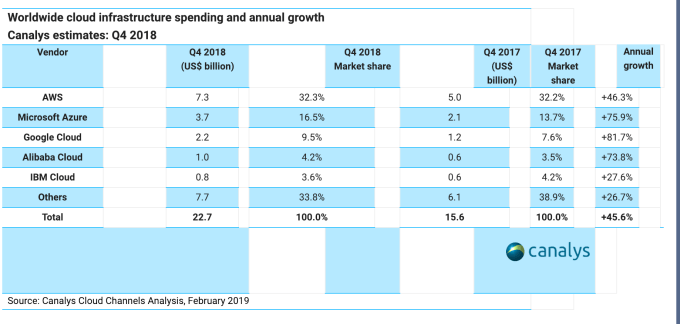
That brings us to a company that guessed for us, Canalys. While the firm didn’t share its methodology, it did come up with a figure of $2.2 billion for the quarter. Given that the company is closing larger deals and was at a billion last year, this figure feels like it’s probably in the right ballpark, but of course it’s not from the horse’s mouth, so we can’t know for certain.

Frankly, I’m a little baffled why Alphabet’s shareholders actually let the company get away with this complete lack of transparency. It seems like people would want to know exactly what they are making on that crucial part of the business, wouldn’t you? As a cloud market watcher, I know I would. So we’re left to companies like Canalys to fill in the blanks, but it’s certainly not as satisfying as Google actually telling us. Maybe next quarter.

05 Feb 2019

This Marie Kondo-inspired Twitter tool will help you declutter your timeline so it again ‘sparks joy’

Does your Twitter timeline spark joy? If you’re like most people, probably not. Over the years, you probably politely followed back a few too many Twitter accounts, and now have a timeline filled with all sorts of random tweets from people you can’t even remember following in the first place. A new Twitter tool, Tokimeki Unfollow, may help.

Designed by Julius Tarng, previously of Facebook and Branch, “tokimeki” roughly translates to “spark joy.” It’s a nod to Tarng’s source of inspiration for the new tool – Marie Kondo’s hugely popular Netflix show “Tidying Up.” The series, based on the decluttering expert’s own KonMari method of organization, has prompted many to start purging their homes of unwanted and unloved clothing, books, papers, toys, and more in the weeks following the series’ debut.

So why not take the idea to Twitter?

After all, if anything is a source of clutter these days…it’s the build-up of timeline junk thanks to poor following choices in years past.

Tokimeki Unfollow is easy to use, though its newfound popularity may have it running a little slow at times, we found.

The tool works by using cookies and your browser’s local storage to save its progress. If you opt in, it can save your “keep” and “unfollow” progress secured on the Glitch servers.

The tool also uses your Twitter authentication to pull in your follows, their tweets, and to unfollow accounts and help you manage your lists.

Above: I may never be able to konmari my way out of this

The tool will ask you which order you want to use to begin the decluttering, with “oldest first” as the recommended default. It suggests that you hide the account’s bio – in case you’re too swayed by who someone is, rather than what they tweet. But you can toggle this setting on or off as you prefer.

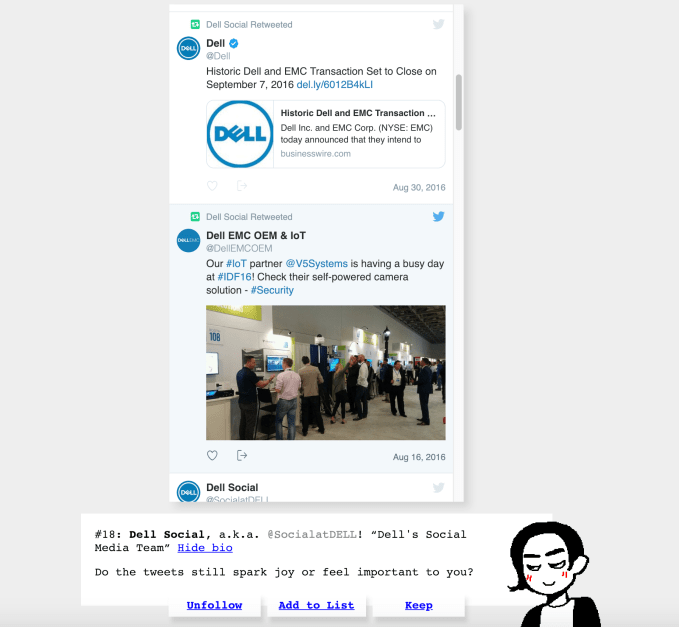
Once up-and-running, the tool asks you if the tweets still spark joy or feel important?

You then have to choose to keep following the account or unfollow it.

Above: Apparently, there was a time I followed Dell on Twitter.

If you unfollow, the tool even reminds you to thank the account for all the tweets you enjoyed before.

You can also organize accounts into lists along the way, which is handy.

List-making is a good middle ground for those times when there are accounts you want to track – like perhaps those with memes or jokes, or those dedicated to favorites celebs, musicians, sports figures and teams, etc. – but don’t want in your main timeline.

Unfortunately, the tool missed pulling in a couple of my lists (perhaps I have too many…), but you can open the Twitter user’s account in a separate tab and add them to a list from there, if need be.

The process of decluttering Twitter this way will take time, but it will also give you the chance to truly consider whose content is worth following.


For those who have been on Twitter from day one, it may be impossible to ever get through the decluttering process this way – but it’s at least a productive time filler.

Now if only someone would build Tokimeki tools for Facebook, Instagram, and my browser’s bookmarks….

We asked Tarng to give us more info about the idea behind building Tokimeki Unfollow and how it helps to clean up messy Twitter accounts.

TC: Were you a fan of Marie Kondo and the KonMari Method before the Netflix series?

JT: I wouldn’t say “fan” but I had adopted her clothes folding techniques since her book made the rounds a few years ago. The new Netflix show was definitely a reminder, and it was interesting and (at times disappointing) to see American mixed reactions to it!

TC: Have you practiced the method yourself at home?

JT: I actually had always been pretty good about getting rid of stuff since I was young, so KonMari was actually more of a confirmation to me that I wasn’t the only one that thought that way. But I loved the idea of thanking the objects before throwing or donating them away – it’s a very thoughtful way to think about your possessions.

TC: Why did you decide to use this organizational method on your Twitter account?

JT: Well, I had just come back to the states after a year abroad and a year off of Twitter. I really missed the human connection, but my feed had become very anxiety-inducing. I saw some joke tweets about konmari for Twitter, and that was the confirmation for me that I should spend some time building it! Firstly, it was for myself, so some of my personal opinions are in there – like hiding people’s bios so I wouldn’t be swayed by who they were, [and] focusing on the content itself.

TC: How long did it take to build?

JT: I started about 3 weeks ago. Finished this past weekend. The code is open source on Glitch and you can rewind the history to see the development unfold!

TC: Did anyone help?

JT: I had some guidance from my fiancée and some friends, but I did most of it myself.

TC: What should people know about using this tool?

JT: The tool is more about the process than the end result. Even if people use it for 15 minutes and stop, I hope those 15 minutes help them construct new rules for themselves for who and what type of account to follow in the future. I hope they reflect on how they’ve changed as a person through their follows over the years! I recommend using the “Oldest first: option to really get a look at your past.

TC: The tool has received a lot of attention in the past couple of days (see, for example, Wired, Fortune, and Motherboard’s reports, among others). Do you plan to keep working on it or adding more features, as a result?

JT: It is open source so I’m hoping others remix it on Glitch and customize their experience. It is a personal tool that happened to become popular, so I won’t add features I wouldn’t use myself. I still have 600/1000 to go myself, so however long it takes to go through the rest I’ll tweak it!

05 Feb 2019

Official emoji debut for disabled folks, service dogs, waffles and more

A gaggle of new emoji have just been approved by the Unicode Consortium, meaning they’ll be standard across any platforms that choose to support them. This batch includes some much-needed representation for people with various disabilities, new animals from guide dogs to otters, food and many more objects.

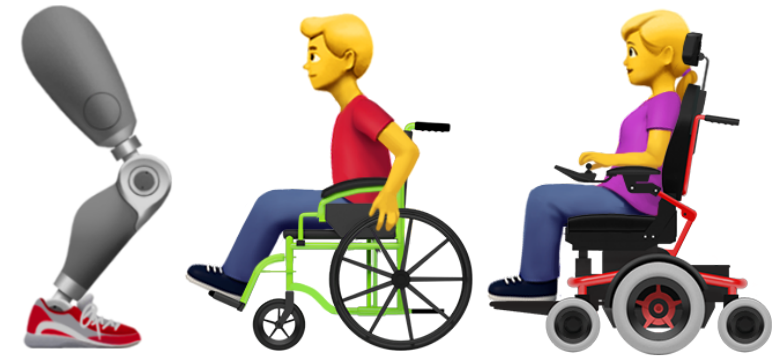
Folks with disabilities get a nice variety of new emoji, though of course these aren’t exhaustive (for example, how do you represent a learning disability or mental illness?). Still, Apple’s proposal for the new emoji points out the necessity of, for example, having both mechanical and manual wheelchairs:

The type of assistive technology that is used by individuals is very personal and mandated by their own disability need. For someone who cannot self-propel and therefore uses an electric wheelchair, it would not be realistic to only show a manual chair. For those who can use a manual version, it would not be realistic to insinuate that they have less mobility than they do. Therefore, these should be seen as two totally separate forms of assistive device.

These images, as usual, are only samples; the final emoji that will be used depend on your device or service. However, since Apple proposed these ones and they are of course a popular platform for emoji use, you can probably expect these to be very like the final ones.

There are lots of other useful things added as well. Guide and service dogs; otters and flamingos; some tasty food like waffles and butter (my breakfast can now finally be represented accurately); and some items particularly relevant to Indian users — a sari, diya lamp, and tuk-tuk.

Adding support for people of different colors and genders, including non-gendered imagery, has been an ongoing process for the last few years. The latest addition is a pair of non-gendered people holding hands, with the full set of color variations. Expect more along these lines; other proposals have been made but haven’t yet been finalized.

You can browse the full list of new emoji here; expect them to be added to your favorite messaging app after a handful of months once art and code updates are final.

05 Feb 2019

Angela Ahrendts is leaving Apple

Angela Ahrendts will depart Apple in April, almost exactly five years after taking on a role as the company’s senior vice president of retail. Apple says Ahrendts is leaving “for new personal and professional pursuits.”

Ahrendts’ joining of Apple in 2014 was massive news, with her having just served as the CEO of the luxury fashion brand Burberry from 2006 to 2014. She lead the charge to “reimagine” Apple’s retail stores, shifting them to what she hoped felt more like a “modern-day town square”. Her in-store product education program, “Today at Apple”, launched around two years ago, and the company continues to add new courses on the regular.

The company says Ahrendts’ responsibilities will now be handled by Deirdre O’Brien, whose title is changing from “senior vice president of People” to “senior vice president of Retail + People”. O’Brien joined Apple 30 years ago in 1988; her leadership profile on Apple’s site notes that prior to her VP of People role, she was “responsible for demand forecasting, supply planning and delivery of Apple products” as the head of Worldwide Sales and Operations.

05 Feb 2019

Snapchat shares soar as it stops losing users, shrinks losses in Q4

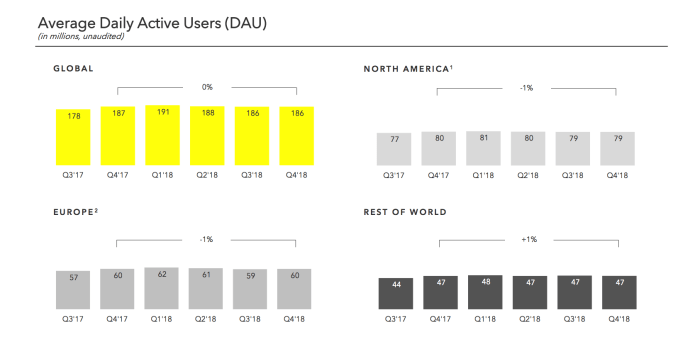
Snapchat isn’t growing again, but at least it didn’t hemorrhage any more users in its Q4 earnings report. The company stayed flat at 186 million daily users after falling from 191 million in Q1 to 188 million in Q2 to 186 million in Q3. It exceeded an expected quarterly count of 184.2 million user, though 186 million is still down 0.3 percent year-over-year. It reached record revenue of $390 million in the holiday quarter, up 36 percent year-over-year to beat the $378 million Wall Street estimate, and Snapchat lost just $0.04 per share compared to Wall Street’s $0.08 loss estimate for a beat in Q4 earnings.

The highlight of the earnings report was that Snap has managed a 68 percent year-over-year improvement in its adjusted EBITDA losses, which came in at $50 million (though net loss was still $158 million). With 43 percent full-year revenue growth in 2018, “This limited our Q4 losses to just 13 percent of our revenue, compared to just one year ago when our Q4 losses totaled more than 50 percent of revenue” CEO Evan Spiegel wrote in his opening remarks. That means Snap might make it to profitability in the next year or two before running out of cash and having to take more from big investors or consider being acquired.

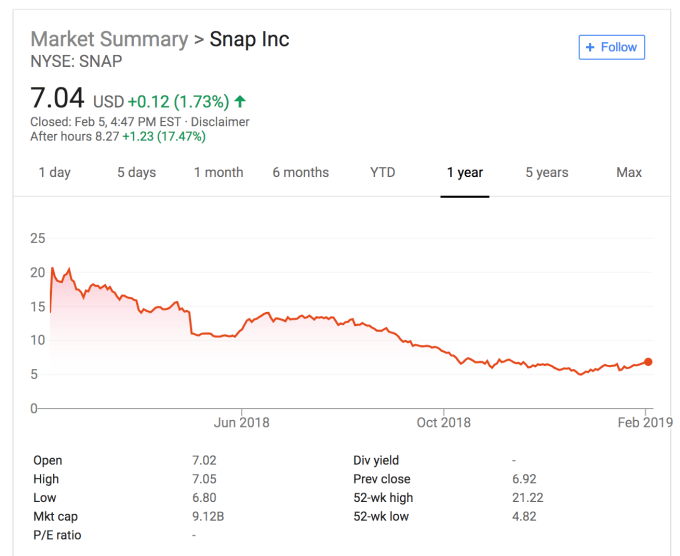
After closing at $7.04 today, Snap was up around 17 percent in after hours trading to hover around $8.27 — still way down from a peak of $20.75 a year ago.

Importantly, Snapchat grew its Europe user count from 59 million to 60 million and stayed flat at 79 million in North America. Since those are its two best monetizing markets, stopping the shrinkage there was critical. That helped spur a 37 percent year-over-year increase in global average revenue per user, and a 30 percent boost over Q3.

Looking forward, Snap expects between $285 million and $310 million in Q1 2019, which would be a 24 percent to 34 percent year-over-year increase, while its adjusted EBITDA losses are expected to be between $165 million and $140 million, down from $218 million in Q1. It ended the year with $1.3 billion in cash and securities.

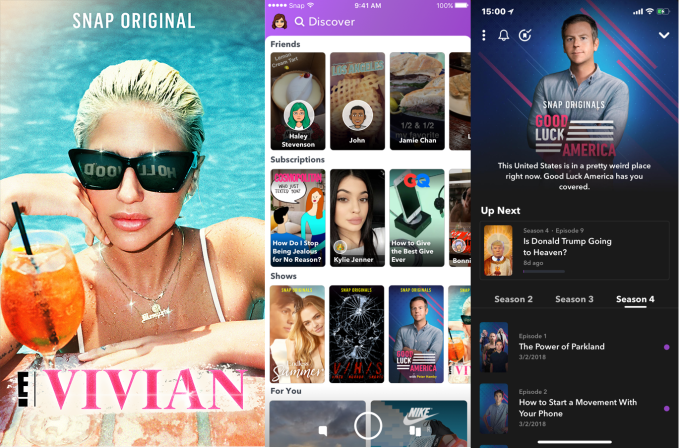
On the content and engagement front, Snap is reaching 70 percent of total US 13 to 34 year olds with premium mobile video, which could be very lucrate if it can keep its user count stable or growing. 70 precent of users played with or viewed a lens each day, though Snap didn’t provide an update on its Snaps Created Per Day metric that’s useful for judging the health of its messaging feature. 30 percent more people are watching its Discover section’s Publisher Stories and Shows every day versus last year, with Snapchat’s new algorithmically personalized Bitmoji Stories seeing 40 million viewers in December. That’s powerful because since Snap makes the content in-house, it doesn’t have to share ad revenue with anyone.

Meanwhile, Snapchat announced it’s finally starting to roll out its Android rebuild to some users, and the initial test results were promising. App startup time was reduced 20 percent, and the improvements could reinvigorate Snapchat for Android’s growth after years of bugs and slow loading dragging down Snapchat’s user count.

Snapchat’s future hinges on its ability to get to profitability so it can keep financing R&D in augmented reality and hardware. Snap won’t be able to keep up with dedicated AR companies like Magic Leap or tech giants like Facebook and Apple if it’s constantly trying to cut costs. It could still be years before fashionable and useful AR eyewear is feasible and Snap must weather the storm until then. The fact that it’s no longer bleeding users and its losses are falling shows great progress in that direction. Most tech giants like Apple and Google end up sitting on their cash, unsure what to invest in. Snapchat seems to have plenty of options if it can just start stockpiling cash instead of spending it all.

05 Feb 2019

Snapchat’s Android usage keeps falling but rebuild tests well

Snap has finally begun publicly testing the engineering overhaul of its slow and buggy Android app that for years has cost Snapchat users. Promising early results and reduction in app startup time could help Snapchat fix its growth problem after daily active users sank in Q2 and Q3 before staying put at 186 million in Q4, Snap announced today in its earnings report today.

“We ended the year with user engagement stabilizing and have started rolling out the new version of our Android application to a small percentage of our community” CEO Evan Spiegel wrote. “Early tests show promising results especially on less performant devices, including a 20 percent reduction in the average time it takes to open Snapchat.” The problem is that because “Our engineering team remains focused on rebuilding our Android application”, they haven’t been dedicated to fixing the existing version. That means that despite iOS daily active users and average time spent growing faster than last year, Android dragged Snapchat again to see no total daily user growth.

Interim Chief Financial Officer Lara Sweet noted that “While we are not going to give specific guidance on daily active users, we are cautiously optimistic and we do not foresee a sequential decline in daily active users in Q1 2019.” It seems Snap believes the new year is going well and the Android rollout could stem losses so it might finally grow its user count again, or at least stop shrinking.

05 Feb 2019

Healthcare by 2028 will be doctor-directed, patient-owned and powered by visual technologies

Visual assessment is critical to healthcare – whether that is a doctor peering down your throat as you say “ahhh” or an MRI of your brain. Since the X-ray was invented in 1895, medical imaging has evolved into many modalities that empower clinicians to see into and assess the human body.  Recent advances in visual sensors, computer vision and compute power are currently powering a new wave of innovation in legacy visual technologies(like the X-Ray and MRI) and sparking entirely new realms of medical practice, such as genomics.

Over the next 10 years, healthcare workflows will become mostly digitized, with wide swaths of personal data captured and computer vision, along with artificial intelligence, automating the analysis of that data for precision care. Much of the digitized data across healthcare will be visual and the technologies that capture and analyze it are visual technologies.

These visual technologies traverse a patient’s journey from diagnosis, to treatment, to continuing care and prevention.They capture, analyze, process, filter and manage any visual data from images, videos, thermal, x-ray’s, ultrasound, MRI, CT scans, 3D, and more. Computer vision and artificial intelligence are core to the journey.

Three powerful trends — including miniaturization of diagnostic imaging devices, next generation imaging to for the earliest stages of disease detection and virtual medicine — are shaping the ways in which visual technologies are poised to improve healthcare over the next decade.
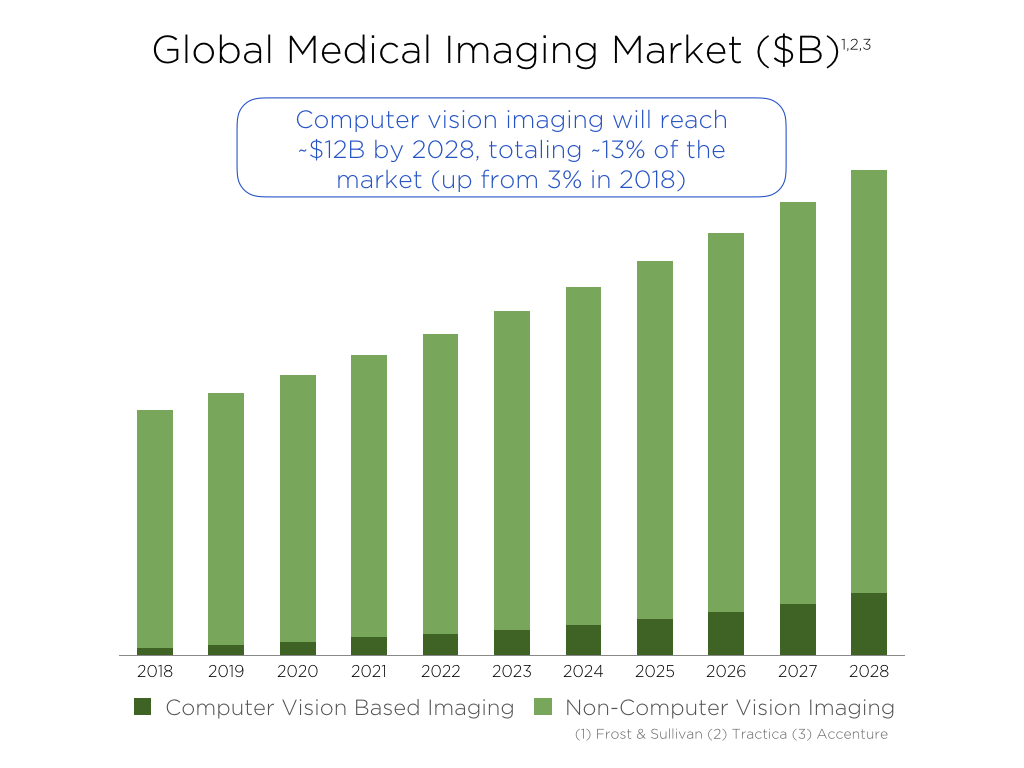
Miniaturization of Hardware Along with Computer Vision and AI will allow Diagnostic Imaging to be Mobile

Medical imaging is dominated by large incumbents that are slow to innovate. Most imaging devices (e.g. MRI machines) have not changed substantially since the 1980s and still have major limitations:

  • Complex workflows: large, expensive machines that require expert operators and have limited compatibility in hospitals.

  • Strict patient requirements: such as lying still or holding their breath (a problem for cases such as pediatrics or elderly patients).

  • Expensive solutions: limited to large hospitals and imaging facilities.

But thanks to innovations in visual sensors and AI algorithms, “modern medical imaging is in the midst of a paradigm shift, from large carefully-calibrated machines to flexible, self-correcting, multi-sensor devices” says Daniel K. Sodickson, MD, PhD, NYU School of Medicine, Department of Radiology.
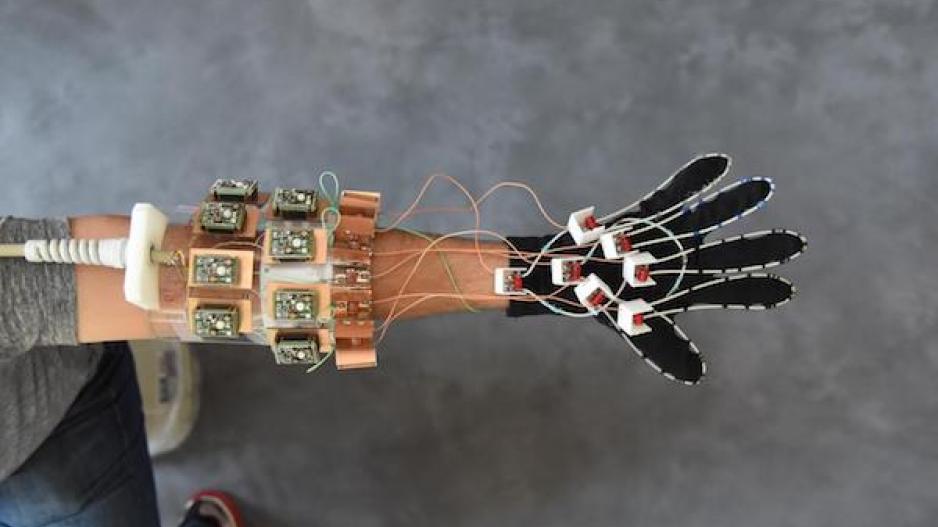
MRI glove-shaped detector proved capable of capturing images of moving fingers.  ©NYU Langone Health

Visual data capture will be done with smaller, easier to use devices, allowing imaging to move out of the radiology department and into the operating room, the pharmacy and your living room.

Smaller sensors and computer vision-enabled image capture will lead to imaging devices that are being redesigned a fraction of the size with:

  • Simpler imaging process: with quicker workflows and lower costs.

  • Lower expertise requirements: less complexity will move imaging from the radiology department to anywhere the patient is.

  • Live imaging via ingestible cameras: innovation includes powering ingestibles via stomach acid, using bacteria for chemical detection and will be feasible in a wider range of cases.

“The use of synthetic neural network-based implementations of human perceptual learning enables an entire class of low-cost imaging hardware and can accelerate and improve existing technologies,” says Matthew Rosen, PhD, MGH/Martinos Center at Harvard Medical School.
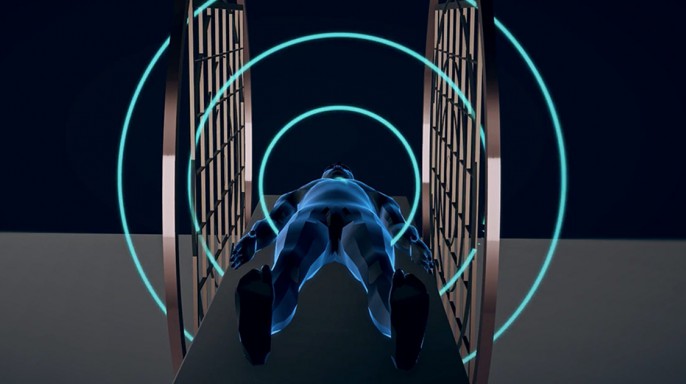
©Matthew Rosen and his colleagues at the Martinos Center for Biomedical Imaging in Boston want liberate the MRI.

Next Generation Sequencing, Phenotyping and Molecular Imaging Will Diagnose Disease Before Symptoms are Presented

Genomics, the sequencing of DNA, has grown at a 200% CAGR since 2015, propelled by Next Generation Sequencing (NGS) which uses optical signals to read DNA, like our LDV portfolio company Geniachip which was acquired by Roche. These techniques are helping genomics become a mainstream tool for practitioners, and will hopefully make carrier screening part of routine patient care by 2028.

Identifying the genetic makeup of a disease via liquid biopsies, where blood, urine or saliva is tested for tumor DNA or RNA, are poised to take a prime role in early cancer screening. The company GRAIL, for instance, raised $1B for a cancer blood test that uses NGS and deep learning to detect circulating tumor DNA before a lesion is identified.

Phenomics, the analysis of observable traits (phenotypes) that result from interactions between genes and their environment, will also contribute to earlier disease detection. Phenotypes are expressed physiologically and most will require imaging to be detected and analyzed.

Next Generation Phenotyping (NGP) uses computer vision and deep learning to analyze physiological data, understand particular phenotype patterns, then it correlates those patterns to genes. For example, FDNA’s Face2Gene technology can identify 300-400 disorders with 90%+ accuracy using images of a patient’s face. Additional data (images or videos of hands, feet, ears, eyes) can allow NGP to detect a wide range of disorders, earlier than ever before.

Molecular imaging uses DNA nanotech probes to quantitatively visualize chemicals inside of cells, thus measuring the chemical signature of diseases. This approach may enable early detection of neurodegenerative diseases such as Alzheimer’s, Parkinson’s and dementia.

Telemedicine to Overtake Brick-and-Mortar Doctors Visits

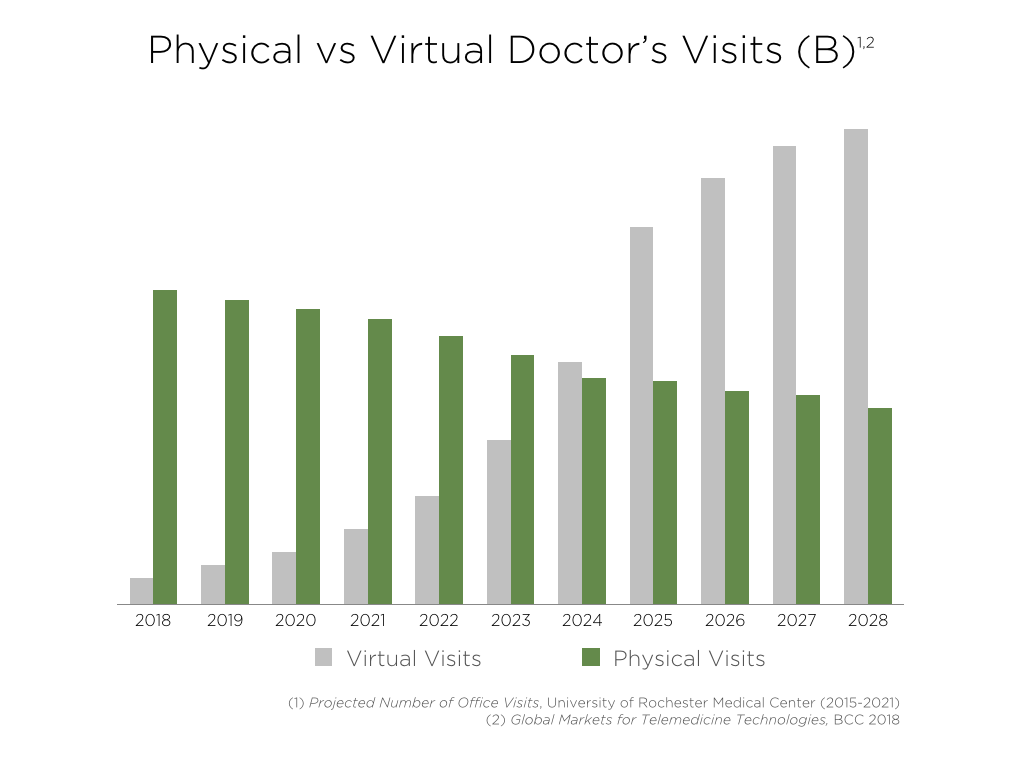
By 2028 it will be more common to visit the doctor via video over your phone or computer than it will be to go to an office.

Telemedicine will make medical practitioners more accessible and easier to communicate with. It will create an all digitized health record of visits for a patient’s profile and it will reduce the costs of logistics and regional gaps in specific medical expertise. An example being the telemedicine services rendered for 1.9M injured in the war in Syria.4

The integration of telemedicine into ambulances has led to stroke patients being treated twice as fast.  Doctors will increasingly call in their colleagues and specialists in real time.
Screening technologies will be integrated into telemedicine so it won’t just be about video calling a doctor. Pre-screening your vitals via remote cameras will deliver extensive efficiencies and hopefully health benefits.

“The biggest opportunity in visual technology in telemedicine is in solving specific use cases. Whether it be detecting your pulse, blood pressure or eye problems, visual technology will be key to collecting data,” says Jeff Nadler, Teldoc health.

Remote patient monitoring (RPM) will be a major factor in the growth of telemedicine and the overall personalization of care. RPM devices, like we are seeing with the Apple Watch, will be a primary source of real-time patient data used to make medical decisions that take into account everyday health and lifestyle factors. This personal data will be collected and owned by patients themselves and provided to doctors.

Visual Tech Will Power the Transformation of Healthcare Over the Next Decade

Visual technologies have deep implications for the future of personalized healthcare and will hopefully improve the health of people worldwide. It represents unique investment opportunities and we at LDV Capital have reviewed over 100 research papers from BCC Research, CBInsights, Frost & Sullivan, McKinsey, Wired, IEEE Spectrum and many more to compile our 2018 LDV Capital Insights report. This report highlights the sectors that power to improve healthcare based on the transformative nature of the technology in the sector, projected growth and business opportunity.

There are tremendous investment opportunities in visual technologies across diagnosis, treatment and continuing care & prevention that will help make people healthier across the globe.


05 Feb 2019

SF also denies JUMP’s electric scooter appeal

A neutral hearing officer in the San Francisco Municipal Transportation Agency has denied Uber -owned JUMP’s appeal regarding the SFMTA’s decision to not provide JUMP a permit to operate shared electric scooters in the city.

“We are pleased the hearing officer validated our permitting process, which above all, prioritized the public interest,” SFMTA Communications Manager Ben Jose said in a statement to TechCrunch.

JUMP argued that the SFTMA did not fairly judge its offering against the likes of Skip and Scoot — the two operators granted permits for shared electric scooter services. But SFMTA Hearing Officer James Doyle has determined the SFMTA did not improperly deny JUMP a permit to operate in the program.

“Given the equal opportunity afforded to each applicant, I cannot find that the SFMTA’s Pilot Program proposal was fundamentally unfair to any applicant, least of all to JUMP, which has been engaged in the alternative mobility industry for a considerable period of time before its e-scooter efforts commenced in San Francisco,” he wrote in his decision.

JUMP also argued it was given a fair rating in the experience category due to its relationship with Uber, which bought the company last year. Uber, of course, has had a contentious relationship with the city of San Francisco as a result of its ride-hailing business. In the SFMTA’s decision, it did point to JUMP’s relationship with Uber as an area of concern.

“The SFMTA’s ‘concern’ about the Uber connection does seem somewhat inappropriate, given how dissimilar the ride hailing industry is from the business of e-scooters for hire,” Doyle writes. “But again, even if JUMP had merited a strong rating in this category, I find that there is still a preponderance of evidence in the record to support the lower overall comparison of its application, and for the SFMTA’s denial of a permit to JUMP. As to the Uber connection, there remains absolutely no evidence that Uber’s parent company status has or will in any way jeopardize the strong working relationship that JUMP has already enjoyed with the City and with the SFMTA.”

In the event the SFMTA does decide to add more scooters during the second half of the pilot program, Doyle recommends the agency allow JUMP to participate “at some level.”

After the first six months of the program, in April, the SFMTA can potentially increase the number of scooters from the current max of 625 to 2,500. This juncture, Doyle said, should be able to accommodate the addition of other operators.

This decision, however, is not surprising given Ford-owned Spin received the same outcome last week. In his decision, Doyle said “Spin appears to be an experienced and capable operator.”

Similar to what Doyle said about Spin, he’s convinced JUMP “has the expertise and operational capacity to meet each of the terms of the Pilot Program proposal based on a history of successful past experience with its shared e-bikes in San Francisco — experience that may not have been adequately taken into account.  JUMP’s application may not be one of the most thoroughly detailed, but I find that certainly by now JUMP has all of the information it might need about the Agency’s requirements for its effective future participation in the 2d Phase of the Pilot Program.”

Still, as a condition for JUMP to be able to participate in phase two of the pilot, Doyle recommends JUMP be required to submit additional documentation to show it would comply with operational conditions and requirements the SFMTA might impose, “especially with respect to those categories in JUMP’s application that were deemed to be comparatively rated as ‘poor’ as well as ‘fair.'” JUMP received a poor rating pertaining to safety, and a fair rating for its experience.

I’ve reached out to Uber and will update this story if I hear back.

05 Feb 2019

Google Home can now translate conversations on-the-fly

Just last month, Google showed off an “Interpreter mode” that would let Google Home devices act as an on-the-fly translator. One person speaks one language, the other person speaks another, and Google Assistant tries to be the middle man between the two.

They were only testing it in select locations (hotel front desks, mostly) at the time, but it looks like it’s gotten a much wider rollout now.

Though Google hasn’t officially announced it, AndroidPolice noticed that a support page for the feature just went public. We tested it on our own Google Home devices, and sure enough: interpreter mode fired right up.

To get started, you just say something like “Hey Google, be my Spanish interpreter,” or “Hey Google, help me speak Italian.”

Curiously, you currently have to say the initial command in English, French, German, Italian, Japanese, or Spanish, but once it’s up and running you should be able to translate between the following languages:


• Czech
• Danish
• Dutch
• English
• Finnish
• French
• German
• Greek
• Hindi
• Hungarian
• Indonesian
• Italian
• Japanese
• Korean
• Mandarin
• Polish
• Portuguese
• Romanian
• Russian
• Slovak
• Spanish
• Swedish
• Thai
• Turkish
• Ukrainian
• Vietnamese

It works pretty well for basic conversations in our quick testing, but it has its quirks. Saying “Goodbye”, for example, ends the translation rather than translating it into the target language, which might be a little confusing if one half of the conversation didn’t realize the chat was nearing its end.

The new feature should work on any Google Home device — and if it’s one with a screen (like Google’s Home Hub), you’ll see the words as they’re translated.

05 Feb 2019

NASA cubecraft WALL-E and EVE sign off after historic Mars flyby

A NASA mission that sent two tiny spacecraft farther out than any like them before appears to have come to an end: Cubesats MarCO-A and B (nicknamed WALL-E and EVE) are no longer communicating from their positions a million and two million miles from Earth respectively.

The briefcase-sized craft rode shotgun on the Insight Mars Lander launch in May, detaching shortly after leaving orbit. Before long they had gone farther than any previous cubesat-sized craft, and after about a million kilometers EVE took a great shot of the Earth receding in its wake (if wake in space were a thing).

They were near Mars when Insight made its descent onto the Red Planet, providing backup observation and connectivity, and having done that, their mission was pretty much over. In fact, the team felt that if they made it that far it would already be a major success.

“This mission was always about pushing the limits of miniaturized technology and seeing just how far it could take us,” said the mission’s chief engineer, JPL’s Andy Klesh, in a news release. “We’ve put a stake in the ground. Future CubeSats might go even farther.”

The two craft together cost less than $20 million to make, a tiny fraction of what traditionally sized orbiters and probes cost, and of course their size makes them much easier to launch as well.

However, in the end these were experimental platforms not designed to last years — or decades, like Voyager 1 and 2. The two craft have ceased communicating with mission control, and although this was expected, the cause is still undetermined:

The mission team has several theories for why they haven’t been able to contact the pair. WALL-E has a leaky thruster. Attitude-control issues could be causing them to wobble and lose the ability to send and receive commands. The brightness sensors that allow the CubeSats to stay pointed at the Sun and recharge their batteries could be another factor. The MarCOs are in orbit around the Sun and will only get farther away as February wears on. The farther they are, the more precisely they need to point their antennas to communicate with Earth.

There’s a slim chance that when WALL-E and EVE’s orbits bring them closer to the sun, they’ll power back on and send a bit more information, and the team will be watching this summer to see if that happens. But it would just be a cherry on top of a cherry at this point.

You can learn more about the MarCO project here, and all the images the craft were able to take and send back are collected here.