Category: UNCATEGORIZED

11 Aug 2019

3D-printing organs moves a few more steps closer to commercialization

New successes in printing vascular tissue from living cells point to the accelerating pace of development of 3D printing tissue — and eventually the ability to manufacture organs from small samples of cells.

Late last month Prellis Biologics announced a $8.7 million round of funding and some significant advancements that point the way forward for 3D printed organs while a company called Volumetric Bio based on research from a slew of different universities unveiled significant progress of its own earlier this year.

The new successes from Prellis have the company speeding up its timeline to commercialization including the sale of its vascular tissue structures to research institutions and looking ahead to providing vascularized skin grafts, insulin producing sells, and a vascular shunt made from the tissue of patients who need dialysis, according to an interview with Melanie Matheu, Prellis’ chief executive officer and co-founder.

The creation of a vascular shunt made from a patient’s own cells should increase the chances of the procedure working successfully, says Matheu. “[If] that shunt fails there aren’t many other options… and then people have ports put in their chest.” The proposed treatment from Prellis could increase quality of life and longevity of people who are waiting for a kidney,” according to Matheu. 

A few months earlier, a team of researchers led by bioengineers Jordan Miller of Rice University and Kelly Stevens of the University of Washington (UW) with collaborators from UW, Duke University, Rowan University and the design firm, Nervous System, revealed a model of an air sac that mimicked the function of human lungs. The model could deliver oxygen to surrounding blood vessels — creating vascular networks that mimic the body’s own passageways.

“One of the biggest road blocks to generating functional tissue replacements has been our inability to print the complex vasculature that can supply nutrients to densely populated tissues,” said Miller, assistant professor of bioengineering at Rice’s Brown School of Engineering, in a statement. “Further, our organs actually contain independent vascular networks — like the airways and blood vessels of the lung or the bile ducts and blood vessels in the liver. These interpenetrating networks are physically and biochemically entangled, and the architecture itself is intimately related to tissue function. Ours is the first bioprinting technology that addresses the challenge of multivascularization in a direct and comprehensive way.”

Miller has launched a startup to commercialize the research called Volumetric Bio. While the researchers have made their findings freely available through open source licenses, they’re hoping to commercialize the technology by selling their bioprinters and materials and reagents.

The technology that Miller and his team develops uses photoreactor chemicals that respond to light, so specific area of liquid solidify while others can be rinsed away. The problem is that most of these chemicals have been found to cause cancer, so Miller and his team found a replacement to the traditional photoreactors in an unlikely place — the supermarket aisle.

The researchers surmised that food dye might do the trick and Miller just went to the supermarket and picked up a dye that’s typically used in baking, according to a story in Scientific American.

“We were screaming with joy, because it was stunning how simple an idea it was; it immediately enabled us to make this dramatically more complex architecture,” Miller told the magazine.

Prellis has made significant strides of its own. Alongside the funding, the company announced the successful implantation of tumors in animal subjects that were made using the company’s vascular scaffolds. The target market for these tests is in drug discovery, where animal testing can prove the efficacy of new treatments before they’re used on people in drug trials.

The printed structures, a combination of living cells and hydrogels are designed to provide a sort of scaffolding that an animal’s own cells can build on. In the study, conducted at Stanford University, Prellis was able to fully graft a tumor onto an animal using just 200,000 cells — far fewer than what’s required for typical tumor studies, according to the company.

And, as the company noted, within eight weeks, researchers identified branched vasculature of up to 50 microns inside of the transplanted structures, which indicated the animal’s vasculature system had incorporated the scaffolding into its own circulatory system.

Prellis is actually pitching its pre-made vascular scaffolds to researchers for their work on 3D printed biologics. Scientists at pharmaceutical companies and universities including UC San Francisco, Johns Hopkins, UC Irvine, and Memorial Sloan Kettering, are developing tests with standardized tissue structures (something that’s important for drug trials).

The drug discovery applications alone are a multi-billion dollar market, says Matheu, but the company is focused on its goal of fully transplantable 3D printed organs, starting with kidneys. The company is going to do their first large animal studies for organ implantation by the end of the year.

“My goal has always been and will always be that we want this to cost the same amount as procurement from a human donor,” says Matheu.

As Matheu looks ahead to the places where more work needs to be done, she points to getting a supply chain to source the right cells for drug therapies and organ development.

So the roadmap for new products begins with the vascular scaffolds, runs through vascularized skin grafts and developing insulin producing cells and vascular shunts for dialysis patients.

“Regenerative medicine has made enormous leaps in recent decades. However, to create complete organs, we need to build higher order structures like the vascular system,” said Dr. Alex Morgan, Principal at Khosla Ventures, in a statement. “Prellis’ optical technology provides the scaffolding necessary to engineer these larger masses of tissues.  With our investment in Prellis, we’re supporting an initiative that will ultimately produce a functioning lobe of the lung, or even a kidney, to be used in addressing an enormous unmet global need.”
11 Aug 2019

3D-printing organs moves a few more steps closer to commercialization

New successes in printing vascular tissue from living cells point to the accelerating pace of development of 3D printing tissue — and eventually the ability to manufacture organs from small samples of cells.

Late last month Prellis Biologics announced a $8.7 million round of funding and some significant advancements that point the way forward for 3D printed organs while a company called Volumetric Bio based on research from a slew of different universities unveiled significant progress of its own earlier this year.

The new successes from Prellis have the company speeding up its timeline to commercialization including the sale of its vascular tissue structures to research institutions and looking ahead to providing vascularized skin grafts, insulin producing sells, and a vascular shunt made from the tissue of patients who need dialysis, according to an interview with Melanie Matheu, Prellis’ chief executive officer and co-founder.

The creation of a vascular shunt made from a patient’s own cells should increase the chances of the procedure working successfully, says Matheu. “[If] that shunt fails there aren’t many other options… and then people have ports put in their chest.” The proposed treatment from Prellis could increase quality of life and longevity of people who are waiting for a kidney,” according to Matheu. 

A few months earlier, a team of researchers led by bioengineers Jordan Miller of Rice University and Kelly Stevens of the University of Washington (UW) with collaborators from UW, Duke University, Rowan University and the design firm, Nervous System, revealed a model of an air sac that mimicked the function of human lungs. The model could deliver oxygen to surrounding blood vessels — creating vascular networks that mimic the body’s own passageways.

“One of the biggest road blocks to generating functional tissue replacements has been our inability to print the complex vasculature that can supply nutrients to densely populated tissues,” said Miller, assistant professor of bioengineering at Rice’s Brown School of Engineering, in a statement. “Further, our organs actually contain independent vascular networks — like the airways and blood vessels of the lung or the bile ducts and blood vessels in the liver. These interpenetrating networks are physically and biochemically entangled, and the architecture itself is intimately related to tissue function. Ours is the first bioprinting technology that addresses the challenge of multivascularization in a direct and comprehensive way.”

Miller has launched a startup to commercialize the research called Volumetric Bio. While the researchers have made their findings freely available through open source licenses, they’re hoping to commercialize the technology by selling their bioprinters and materials and reagents.

The technology that Miller and his team develops uses photoreactor chemicals that respond to light, so specific area of liquid solidify while others can be rinsed away. The problem is that most of these chemicals have been found to cause cancer, so Miller and his team found a replacement to the traditional photoreactors in an unlikely place — the supermarket aisle.

The researchers surmised that food dye might do the trick and Miller just went to the supermarket and picked up a dye that’s typically used in baking, according to a story in Scientific American.

“We were screaming with joy, because it was stunning how simple an idea it was; it immediately enabled us to make this dramatically more complex architecture,” Miller told the magazine.

Prellis has made significant strides of its own. Alongside the funding, the company announced the successful implantation of tumors in animal subjects that were made using the company’s vascular scaffolds. The target market for these tests is in drug discovery, where animal testing can prove the efficacy of new treatments before they’re used on people in drug trials.

The printed structures, a combination of living cells and hydrogels are designed to provide a sort of scaffolding that an animal’s own cells can build on. In the study, conducted at Stanford University, Prellis was able to fully graft a tumor onto an animal using just 200,000 cells — far fewer than what’s required for typical tumor studies, according to the company.

And, as the company noted, within eight weeks, researchers identified branched vasculature of up to 50 microns inside of the transplanted structures, which indicated the animal’s vasculature system had incorporated the scaffolding into its own circulatory system.

Prellis is actually pitching its pre-made vascular scaffolds to researchers for their work on 3D printed biologics. Scientists at pharmaceutical companies and universities including UC San Francisco, Johns Hopkins, UC Irvine, and Memorial Sloan Kettering, are developing tests with standardized tissue structures (something that’s important for drug trials).

The drug discovery applications alone are a multi-billion dollar market, says Matheu, but the company is focused on its goal of fully transplantable 3D printed organs, starting with kidneys. The company is going to do their first large animal studies for organ implantation by the end of the year.

“My goal has always been and will always be that we want this to cost the same amount as procurement from a human donor,” says Matheu.

As Matheu looks ahead to the places where more work needs to be done, she points to getting a supply chain to source the right cells for drug therapies and organ development.

So the roadmap for new products begins with the vascular scaffolds, runs through vascularized skin grafts and developing insulin producing cells and vascular shunts for dialysis patients.

“Regenerative medicine has made enormous leaps in recent decades. However, to create complete organs, we need to build higher order structures like the vascular system,” said Dr. Alex Morgan, Principal at Khosla Ventures, in a statement. “Prellis’ optical technology provides the scaffolding necessary to engineer these larger masses of tissues.  With our investment in Prellis, we’re supporting an initiative that will ultimately produce a functioning lobe of the lung, or even a kidney, to be used in addressing an enormous unmet global need.”

11 Aug 2019

Democratic Presidential nominees are ignoring the issue of our cybersecurity infrastructure

With the long battle for the Democratic nominee for president in 2020 firmly underway, more than 20 political hopefuls are talking about spreading the fruits of a solid economy to millions of middle-class Americans who may have missed the good times, implementing Medicare for all to solve financial healthcare pitfalls, and free college education.

One would-be candidate – Jay Inslee, the governor of the state of Washington – is talking almost exclusively about the need to address climate change far more quickly and far more seriously.
But what has not been discussed by any of them, even briefly, is the stunning existential threat to our critical national security and the entire well-being of the U.S. posed by mounting and painful cyber breaches of infrastructure and other targets. If no would-be candidates can acknowledge the significance and magnitude of the cyber threat – let alone put forward a strategy and plan to defend against the threat – it’s hard to take them seriously as prospective national leaders.
I’m hardly the only one with this view. “When we think about existential threats, government has to understand that electricity doesn’t reside in its own silo and that if something happens to (companies like) us, it would have a potentially cataclysmic impact on finance as well,” utility Southern Company CEO Tom Fanning recently told Fox Business.
Specifically, consider just a few examples of what is going on every day:
 
Election malfeasance. We hear daily outrage about threats to our increasingly digital electoral infrastructure, and yet there is no policy discussion.
 
Rampant theft of intellectual property. The strength of our economy is based on our ability to innovate, as encapsulated in IP. And yet our economic and military rivals are brazenly stealing this IP with impunity. They take our innovation and weaponize it to challenge U.S. industry leadership and compromise our defense military technologies.
 
Targeting of critical infrastructure. When most of our infrastructure was built, it was not with security in mind. Our society is dependent upon our infrastructure. What if our phones didn’t work, we couldn’t bank, electrical and gas service was cut off, our planes couldn’t fly and our ports could not function? Massive financing is required to boost security.
 
Manipulation of privacy by select technology giants. What is, in effect, another sort of breach, is the collection, aggregation and manipulation of our privacy by digital aggregators such as Google and Facebook, which is then further manipulated and stolen by criminals. (Note here: A positive response has been the Federal Trade Commission’s endorsement this month of a $5 billion settlement with Facebook over a long-running probe into its privacy missteps.)
How do we solve these problems? Blatantly dictating solutions would inevitably fail. What we can do successfully is set standards of performance and responsibility, coupled with timelines and severe penalties for failure to perform. There must be accountability –something that sometimes exists in industry (albeit at inadequate levels), but that is wholly missing in government at all levels.
While I care deeply about cybersecurity, I am not naïve about the extreme pressure confronting politicians to score well in polls – a requirement to have a shot at winning their party’s presidential nomination. Arguably, cybersecurity awareness may not fit this bill.
If enhanced cybersecurity is to be injected into the Democratic election agenda, the public must actively promulgate such a step. Supporting an outcry is the irrefutable fact that the signs of risk are flagrant. Earlier this year, Global Risks Report 2019 – published by the World Economic Form – said that the rapid evolution of cyber and technological threats poses one of the most significant dangers to societies around the world.
In the U.S., meanwhile, cybersecurity is now at the forefront of policy discussions and planning for future conflicts. The cyber threat has leveled the playing field in many ways, presenting unique concerns to the U.S. and its allies. Two years ago, the final report of the Department of Defense Science Board Task Force on Cyber Deterrence concluded that cyber capabilities of other nations exceeded U.S. ability to defend systems and said this would remain the case for at least another five to 10 years.
These and other threats manifest themselves through attacks on our digital infrastructure. And as the largest and most digitized economy in the world, we have the most to lose when our infrastructure is comprised. There is no higher priority threat to the U.S. If those who would be our leaders, including Donald Trump, cannot acknowledge such a huge external threat to our security, economy and lifestyle and take steps to resolve it, they have no business vying to become the leader of our nation in 2020.
11 Aug 2019

Democratic Presidential nominees are ignoring the issue of our cybersecurity infrastructure

With the long battle for the Democratic nominee for president in 2020 firmly underway, more than 20 political hopefuls are talking about spreading the fruits of a solid economy to millions of middle-class Americans who may have missed the good times, implementing Medicare for all to solve financial healthcare pitfalls, and free college education.

One would-be candidate – Jay Inslee, the governor of the state of Washington – is talking almost exclusively about the need to address climate change far more quickly and far more seriously.
But what has not been discussed by any of them, even briefly, is the stunning existential threat to our critical national security and the entire well-being of the U.S. posed by mounting and painful cyber breaches of infrastructure and other targets. If no would-be candidates can acknowledge the significance and magnitude of the cyber threat – let alone put forward a strategy and plan to defend against the threat – it’s hard to take them seriously as prospective national leaders.
I’m hardly the only one with this view. “When we think about existential threats, government has to understand that electricity doesn’t reside in its own silo and that if something happens to (companies like) us, it would have a potentially cataclysmic impact on finance as well,” utility Southern Company CEO Tom Fanning recently told Fox Business.
Specifically, consider just a few examples of what is going on every day:
 
Election malfeasance. We hear daily outrage about threats to our increasingly digital electoral infrastructure, and yet there is no policy discussion.
 
Rampant theft of intellectual property. The strength of our economy is based on our ability to innovate, as encapsulated in IP. And yet our economic and military rivals are brazenly stealing this IP with impunity. They take our innovation and weaponize it to challenge U.S. industry leadership and compromise our defense military technologies.
 
Targeting of critical infrastructure. When most of our infrastructure was built, it was not with security in mind. Our society is dependent upon our infrastructure. What if our phones didn’t work, we couldn’t bank, electrical and gas service was cut off, our planes couldn’t fly and our ports could not function? Massive financing is required to boost security.
 
Manipulation of privacy by select technology giants. What is, in effect, another sort of breach, is the collection, aggregation and manipulation of our privacy by digital aggregators such as Google and Facebook, which is then further manipulated and stolen by criminals. (Note here: A positive response has been the Federal Trade Commission’s endorsement this month of a $5 billion settlement with Facebook over a long-running probe into its privacy missteps.)
How do we solve these problems? Blatantly dictating solutions would inevitably fail. What we can do successfully is set standards of performance and responsibility, coupled with timelines and severe penalties for failure to perform. There must be accountability –something that sometimes exists in industry (albeit at inadequate levels), but that is wholly missing in government at all levels.
While I care deeply about cybersecurity, I am not naïve about the extreme pressure confronting politicians to score well in polls – a requirement to have a shot at winning their party’s presidential nomination. Arguably, cybersecurity awareness may not fit this bill.
If enhanced cybersecurity is to be injected into the Democratic election agenda, the public must actively promulgate such a step. Supporting an outcry is the irrefutable fact that the signs of risk are flagrant. Earlier this year, Global Risks Report 2019 – published by the World Economic Form – said that the rapid evolution of cyber and technological threats poses one of the most significant dangers to societies around the world.
In the U.S., meanwhile, cybersecurity is now at the forefront of policy discussions and planning for future conflicts. The cyber threat has leveled the playing field in many ways, presenting unique concerns to the U.S. and its allies. Two years ago, the final report of the Department of Defense Science Board Task Force on Cyber Deterrence concluded that cyber capabilities of other nations exceeded U.S. ability to defend systems and said this would remain the case for at least another five to 10 years.
These and other threats manifest themselves through attacks on our digital infrastructure. And as the largest and most digitized economy in the world, we have the most to lose when our infrastructure is comprised. There is no higher priority threat to the U.S. If those who would be our leaders, including Donald Trump, cannot acknowledge such a huge external threat to our security, economy and lifestyle and take steps to resolve it, they have no business vying to become the leader of our nation in 2020.
11 Aug 2019

Navy ditches touchscreens for knobs and dials after fatal crash

A collision at sea that claimed the lives of 10 sailors has led to the Navy deciding to replace an unpopular touchscreen interface in some ships with more traditional mechanical controls. “Just because you can doesn’t mean you should,” a Navy official said of the outgoing technology.

The crash in question involved the U.S.S. John S. McCain and an oil tanker in August of 2017. The sailors at the helm lost control of the ship and put it in the path of the tanker, resulting in the collision that killed 10 and injured 58 more.

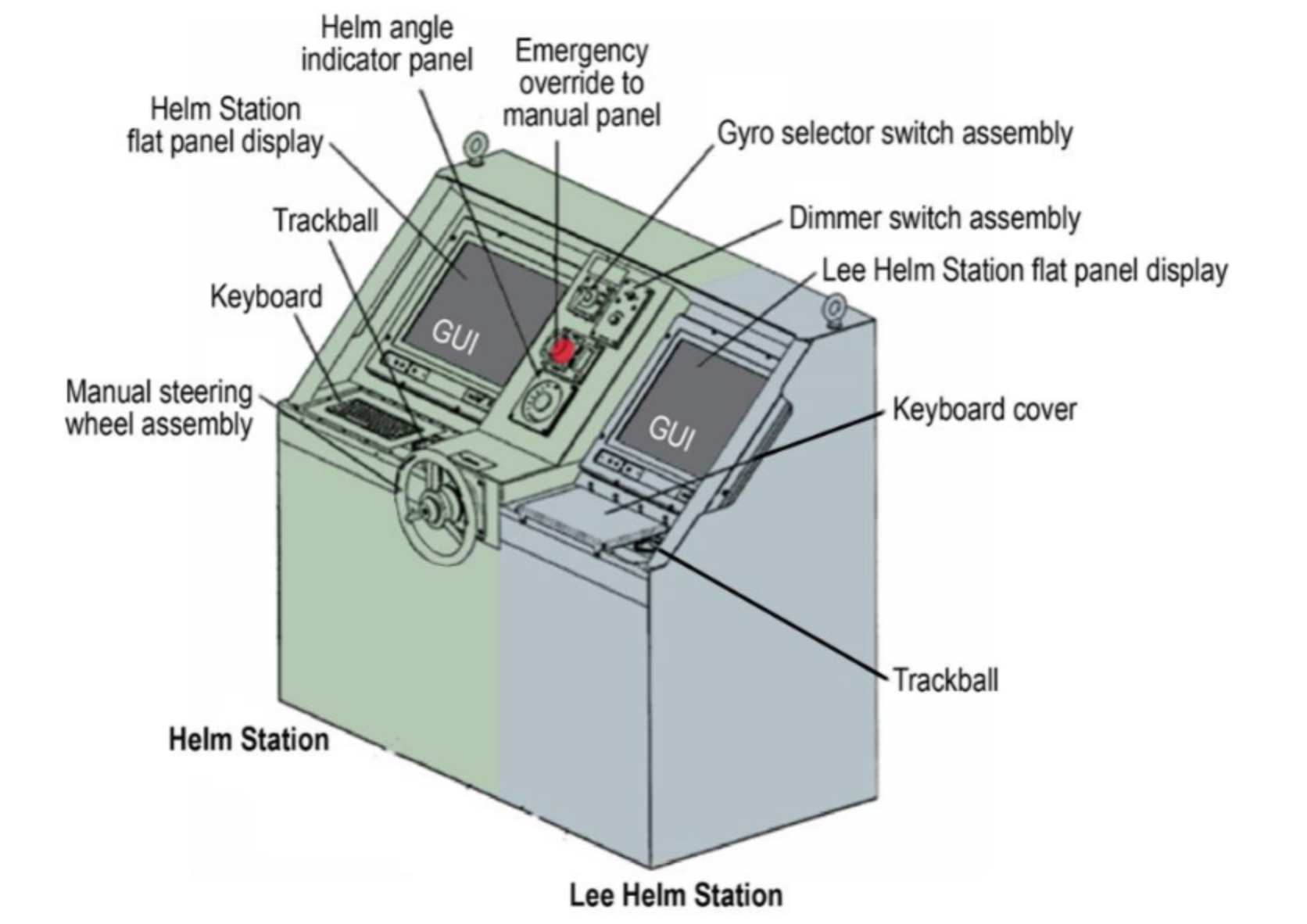
A National Transportation Safety Board investigation was issued recently and found that essentially, the sailors didn’t know how to control the ship properly due to a lack of proper training and documentation. The Northrop-Grumman designed “integrated bridge and navigation system,” or IBNS, is a pair of touchscreens that incorporate a number of functions — not so different from the dash touchscreen in a new car taking over the temperature and radio knobs and buttons. (To be clear, the top image doesn’t show the exact system, but one like it)

bridge helm

But the complexity of the system led to one sailor thinking he was controlling the ships entire throttle, while only in fact controlling one side. This led to the John S. McCain making a sharp turn directly into the path of the oncoming tanker.

“Their misunderstandings expressed during the post-accident interviews and the misunderstandings of other crewmembers who were permanently assigned to the John S McCain point to a more fundamental issue with the qualification process and training with the IBNS,” concluded the report.

Turns out no one really knew how these systems, which were installed only a year ago, really worked, and in a crisis situation were unable to quickly perform the maneuvers necessary. So the Navy is pulling the systems out of the destroyers they have been installed in.

Speaking at an event hosted by the American Society of Naval Engineers, Navy Rear Admiral Bill Galinis explained (as reported by USNI News) that the whole thing was unadvised.

When we started getting the feedback from the fleet from the Comprehensive Review effort… it was really eye-opening. And it goes into the, in my mind, ‘just because you can doesn’t mean you should’ category. We really made the helm control system, specifically on the 51 class [destroyers], just overly complex, with the touch screens under glass and all this kind of stuff. We got away from the physical throttles, and that was probably the number-one feedback from the fleet – they said, just give us the throttles that we can use.

And throttles they can use is exactly what they’ll get, at least on the destroyer classes featuring this particular interface. The contracting process is well underway already and the replacement procedure is quite straightforward, so the ships should get real mechanical controls starting next year. Whether this will lead to a broader questioning of computer-based and touchscreen controls in the Navy and military is anyone’s guess, but at least a few ships should be easier to control going forward.

11 Aug 2019

Vector’s launch business in peril after ‘major change in financing’

Small satellite launch startup Vector has indefinitely shut down operations “in response a major change in financing,” the company confirmed. Co-founder and CEO Jim Cantrell has also been cut loose as part of the upset.

The news comes as a surprise to the space startup community, and apparently to its employees. The company lined up $70 million in funding late last year, and recently was announced as a qualified contestant in DARPA’s Launch Challenge. It even pulled in a multi-million dollar Air Force contract just last week.

That something must have gone awry with this latest funding is manifest. But just what, or who, is unclear. I’m contacting the venture firms in the round (Kodem, Morgan Stanley Alternative Investment Partners, Sequoia, Lightspeed and Shasta Ventures) and will update if anyone has any substantial comment.

The company offered the following statement, as well as confirming that Cantrell is out.

In response to a major change in financing, Vector has had to pause its operations. A core team is now evaluating options to complete the development of the company’s Vector R small launch vehicle while also supporting the Air Force and other government agencies on programs such as the recent ASLON-45 award.
I’ve asked for more details on the size of this “core team” and how many employees Vector will have to lay off as part of this “pause” in operations.

Vector has been working on an orbital launch vehicle, the Vector-R, with a 60 kilogram maximum payload — a small rocket for small satellites, for which there is plenty of demand. A heavier version that could lift 290 kg was also under development.

Plans were to demonstrate an orbital launch by the end of 2019, but as yet that has not occurred; a suborbital launch was also planned for sometime this summer, but that too is yet to happen.

Perhaps the launch delays were the cause of the funding problems, or perhaps the funding problems led to launch delays. I’ll update this story as soon as more details are available.

11 Aug 2019

Tesla explodes after crash on Russian highway

A Tesla vehicle involved in a collision burst into flames and exploded on a highway near Moscow last night, local media reported. The occupants were slightly injured, but the car is toast.

The model of the car is not clear from reporting, but seems to be either a Model S or Model 3. It was being driven by a 41-year-old Russian man, who had his children with him. He had reportedly engaged a drive assist feature (though not necessarily Autopilot) and had his hands on the wheel when he crashed into a tow truck in the left lane.

The driver broke his legs and the kids got away with just bruises, Reuters reported, but the car wasn’t so lucky. Some time after the crash the car caught fire, and shortly after that a pair of explosions occurred within its body, as seemingly captured (I was unable to directly confirm this) in the following video posted by someone in traffic going the other direction:

Firefighters soon arrived and put the flames out. The circumstances of this crash are still unclear, and there will no doubt be an investigation, as there are for any serious issues like this. I’ve asked Tesla for more details and will update this post if I hear back.

While cars crash and catch fire on a fairly regular basis, Teslas have a rare but recurring problem of bursting into flame after a crash, or even spontaneously. The unique dangers of battery-based vehicles are of course interesting, but the sensational nature of reports around them can also give a false idea of those dangers. Tesla cars are in crashes about as often as other vehicles, but fires are rare.

Whether Autopilot was involved is also not clear. The drive-assist mode the driver was using may simply have been cruise control or the like, and the driver told papers that he didn’t notice the tow truck. Until more facts are known speculation is fruitless.

11 Aug 2019

Original Content podcast: ‘Another Life’ is no masterpiece, but we want a second season anyway

Most critics haven’t found much to like in “Another Life,” a new space opera on Netflix, but look: We had a good time with it.

The show stars Katee Sackhoff (best known as Starbuck on “Battlestar Galactica”), who plays Niko Breckinridge, the leader of an expedition across the galaxy to make contact with aliens who sent mysterious artifacts to Earth.

As we explain on the latest episode of the Original Content podcast, we aren’t blind to the show’s flaws — there’s something old-fashioned and formulaic about the writing, and the scripts regularly ignores major gaps in logic.

Still, even we aren’t completely comfortable calling this a “guilty pleasure,” but this definitely feels like a show that was made for us — especially for Jordan, a serious “Battlestar” fan who’s just happy to see Sackhoff back in space.

Sackhoff’s performance is one of the show’s main strengths, as is a general sense of fun. If you’ve been missing the not-particularly-great space adventure TV shows of the 1990s and early 2000s, “Another Life” will probably scratch that itch for you. And even if it doesn’t, please check it out anyway, because Jordan would like to see what happens in season two.

In addition to reviewing the show, we also discuss the news that “Game of Thrones” showrunners David Benioff and D.B. Weiss have signed a multi-year film and TV deal with Netflix — though it’s not clear when they’ll actually have time to create those new shows, since they’re probably going to be busy for a while writing Star Wars.

You can listen in the player below, subscribe using Apple Podcasts or find us in your podcast player of choice. If you like the show, please let us know by leaving a review on Apple. You can also send us feedback directly. (Or suggest shows and movies for us to review!)

And if you want to skip ahead, here’s how the accept breaks down:

0:00 Intro
0:49 Benioff/Weiss sign with Netflix
6:08 “Another Life” review
33:24 “Another Life” spoiler discussion

11 Aug 2019

2020 and the black-box ballot box

One of the scarier notions in the world today is the prospect of American voting machines being compromised at scale: voters thrown off rolls, votes disregarded, vote tallies edited, entire elections hacked.

That’s why the nation’s lawmakers and civil servants flocked (relatively speaking) to Def Con in Las Vegas this week, where hackers at its Voting Village do their best to prove the potential vulnerabilities — including, in some cases, remote command and control — of voting systems.

There are several ways to help secure voting. One, thankfully, is already in place; the decentralization of systems such that every state and county maintains its own, providing a bewildering panoply of varying targets, rather than a single tantalizing point of failure. A second, as security guru Bruce Schneier points out, is to eschew electronic voting machines altogether and stick with good old-fashioned paper ballots.

But paper ballots don’t help much if you use machines to tabulate them, and those machines are compromised — so it’s especially worrying if those are, in engineering parlance, black boxes, i.e. machines which provide visibility only of their inputs and their outputs, not their inner workings.

A solution to this black-box problem is to either tabulate by hand, or instantiate a separate audit process after each election. That means independently sampling and hand-counting a small fraction of the votes, ensuring that the audit result is statistically in line with the overall tally — and if it isn’t, increasing the sample size, up to and including a full recount.

The election threat model is broader than you might think. Researchers can, for instance, transform ballot images so that votes move imperceptibly. Which is one of many reasons why paper ballots are so critical. I have some good news there: as Politico’s excellent voting machine interactive shows, most US states have and/or are moving to paper ballots (and most of the remainder were/are going to mostly vote for the party apparently opposed to democracy anyway.)

The audit situation, though, is … more complicated. Only 25 states require any audits of federal elections, for instance, and only some of those audits have teeth. Witness Verified Voting’s superb interactive explainers of post election audits and state audit laws.

I don’t want to minimize the significance of secure voting machines and the Voting Village hackers’ work. It’s as important as everyone says. But as any security expert will tell you, defense in depth is often even more important than the strength of any individual layer.

Secure machines, which generate individual paper ballots, to be hand-tabulated and/or audited — that’s the kind of defense in depth we want, and personally I’m a little concerned that the final moat, the audit, doesn’t get the attention it deserves. To quote, of all people, a Republican president: “Trust, but verify.”

11 Aug 2019

Week in Review: Netflix’s big problem and Apple’s thinnest product yet

Hey. This is Week-in-Review, where I give a heavy amount of analysis and/or rambling thoughts on one story while scouring the rest of the hundreds of stories that emerged on TechCrunch this week to surface my favorites for your reading pleasure.

Last week, I talked about the Capital One breach and how Equifax taught us that irresponsible actions only affect companies in the PR department.


Thomas Trutschel/Photothek via Getty Images

The big story

Disney is going to eat Netflix’s lunch.

The content giant announced this week that when Disney+ launches, it will be shipping a $12.99 bundle that brings its Disney+ streaming service, ESPN+ and ad-supported Hulu together into a single-pay package. That price brings those three services together for the same cost as Netflix and is $5 cheaper that what you would spend on each of the services individually.

This announcement from Disney comes after Netflix stuttered in its most recent earnings, missing big on its subscriber add while actually losing subscribers in the U.S.

Netflix isn’t the aggregator it once was; its library is consistently shifting, with original series taking the dominant position. As much as Netflix is spending on content, there’s simply no way that it can operate on the same plane as Disney, which has been making massive content buys and is circling around to snap up the market by acquiring its way into consumers’ homes.

Disney has slowly amassed control of Hulu through buying out various stakeholders, but now that it shifts the platform’s weight, it’s pretty clear that it will use it as a selling point for its time-honed in-house content, which it is still expanding.

The streaming wars have been raging for years, but as the services seem to become more like what they’ve replaced, Disney seems poised to take control.

Send me feedback
on Twitter @lucasmtny or email
lucas@techcrunch.com

On to the rest of the week’s news.

Screen Shot 2019 03 25 at 1.37.32 PM 1

Trends of the week

Here are a few big news items from big companies, with green links to all the sweet, sweet added context:

  • Apple Card rolls out
    Months after its public debut, Apple has begun rolling out its Apple Card credit card. We got our hands on the new Apple Card app, so check out more about what it’s like here.
  • Amid a struggling smartphone market, Samsung introduces new flagships
    The smartphone market is in a low-key free fall, but there’s not much for hardware makers to do than keep innovating. Samsung announced the release of two new phones for its Note series, with new features including a time-of-flight 3D scanning camera, a larger size and… no headphone jack. Read more here.
  • FedEx ties up ground contract with Amazon
    As Amazon rapidly attempts to build out its own air fleet to compete with FedEx’s planes, FedEx confirmed this week that it’s ending its ground-delivery contract with Amazon. Read more here.

GAFA Gaffes

How did the top tech companies screw up this week? This clearly needs its own section, in order of badness:

  1. Facebook could get fined billions more:
    [Facebook could face billions in potential damages as court rules facial recognition lawsuit can proceed]
  2. Instagram gets its own Cambridge Analytica:
    [Instagram ad partner secretly sucked up and tracked millions of users’ locations and stories]

Extra Crunch

Our premium subscription service had another week of interesting deep dives. My colleague Sarah Buhr had a few great conversations with VCs in the healthtech space and distilled some of their investment theses into a report.

What leading HealthTech VCs are investing in 

Why is tech still aiming for the healthcare industry? It seems full of endless regulatory hurdles or stories of misguided founders with no knowledge of the space, running headlong into it, only to fall on their faces…

It’s easy to shake our fists at fool-hardy founders hoping to cash in on an industry that cannot rely on the old motto “move fast and break things.” But it doesn’t have to be the code tech lives or dies by.

So which startups have the mojo to keep at it and rise to the top? Venture capitalists often get to see a lot before deciding to invest. So we asked a few of our favorite health VC’s to share their insights.

Here are some of our other top reads this week for premium subscribers. This week, we talked about how to raise funding in August, a month not typically known for ease of access to VCs, and my colleague Ron dove into the MapR fire sale that took place this week:

We’re excited to ramp up The Station, a new TechCrunch newsletter all about mobility. Each week, in addition to curating the biggest transportation news, Kirsten Korosec will provide analysis, original reporting and insider tips. Sign up here to get The Station in your inbox beginning this month.