Category: UNCATEGORIZED

29 May 2019

Eyeing an entry into China, Roblox enters strategic partnership with Tencent

Kids gaming platform Roblox has its sights set on China with today’s news that it has entered into a strategic relationship with Chinese tech giant, Tencent. The companies announced a strategic partnership that will initially focus on education — specifically, coding fundamentals, game design, digital citizenship, and entrepreneurial skills.

The joint venture — still unnamed — will be based in Shenzhen, Roblox says. And its eventual goal is to bring Roblox to China. This is something Roblox has been steadily working towards ahead of today, most recently by adding support for Chinese languages and making its coding curriculum available for free in Chinese.

The first initiative from the new JV will be a scholarship fund that sponsors 15 young developers, who will fly to the U.S. to attend a week-long creator camp at Stanford University. The camp, taught by iD Tech, will teach the students game design, including how to create 3D worlds, along with programming fundaments using Roblox’s developer tools and Lua code.

Roblox and Tencent, together with the China Association for Educational Technology (CAET), are calling for applications from creators ages 10 through 15. Teachers will be encouraged to nominate their students, who can apply online on Roblox’s website. The submissions close on June 14, and scholarship recipients will be notified on June 28.

The first camp will run the week of July 23, and a second session will run the week of August 18. During camp, students will work, eat and stay at Stanford.

“I’m extremely excited to partner with Roblox,” said Steven Ma, Senior Vice President of Tencent, in a statement. “We believe technological advancement will help Chinese students learn by fueling their creativity and imagination. Our partnership with Roblox provides an engaging way to reach children of all ages across China to develop skills like coding, design, and entrepreneurship.”

“Tencent is the perfect partner for Roblox in China,” added Roblox Founder and CEO Dave Baszucki. “They have a deep understanding of the Chinese market and share our belief of the power of digital creation and our vision to bring the world together through play.”

The multi-year JV will continue to invest in educational initiatives, including local coding camps, training programs for instructors to build custom courses, and more.

Unlike other gaming companies, Roblox has to do more than just finding a way into China with the help of a local partner — it also has to create an active community of game creators in the region. That’s because Roblox is a gaming platform, not a game maker itself. Instead, third-party creators build their own games on Roblox for others to play.

Roblox gets a share of the revenue the games make through sales of virtual goods.

In 2017, Roblox said paid out $30 million to its creator community, and noted that number would more than double in 2018. In April, Roblox noted that game players and creators now spend more than a billion hours per month on its platform. Now valued at over $2.5 billion, Roblox claims more 90 million monthly active users — a number that could dramatically increase if Roblox launched in China.


29 May 2019

Easy Transfer processes billions of dollars in tuition for overseas Chinese students

For a founder building a consumer-facing business, overseas Chinese students might just be one of the most coveted targets: they’re young, well educated and have access to the ‘bank’ of mom and dad.

This is a large addressable audience since millions of Chinese families send their children out West to study every year. It doesn’t come cheap. Tuition and living costs can easily add up to $50,000 annually at a top-tier university in the United States, which is still many Chinese people’s favored destination despite heightened tensions between the two countries.

The notion that all overseas Chinese students are rich isn’t always true, as more mid-income parents are willing to compromise their living standards for what they perceive as a “better” education their children can obtain overseas. But, all told, living and studying abroad still costs a lot more than it does back home. At the prestigious Peking University, for example, tuition costs usually amount to no more than $1,000 each year.

One startup from China has carved out a way to capture these potentially heavy spenders. Easy Transfer, which was co-founded in 2013 by then 19-year-old Tony Gao, lives up to its name by taking the hassle out of processing tuition payments for Chinese students studying abroad. The IDG-backed startup crossed an impressive $776 million in transaction volume in 2018, the same year that it broke even, Gao told TechCrunch in a recent interview.

Easy Transfer

Tony Gao, co-founder and president of Easy Transfer / Photo: Easy Transfer 

Simplifying a complicated process

Traditionally, overseas students pay their tuitions through wire transfers, third-party payments processors or credit cards. The last option is attached to high fees, so most go through the first two. Wire transfers, however, can also be a dread. Many students and their parents — as well as the tiny bank in their neighborhood — have little experience sending tuition fees overseas, not to mention parsing China’s regulations around foreign exchange and filling out pages of banking forms in English.

Gao stumbled upon that cumbersome procedure when he asked his mother to pay for his first year at the University of Southern California. The hassle and trouble that simple request caused ultimately prompted him to come up with an alternative solution: his own startup.

“We want to create a cross-border tuition paying service that offers both convenience and low costs,” the now 25-year-old Chinese founder explained.

Easy Transfer competes against a plethora of third-party payments companies like Western Union and PeerTransfer to move tuition fees across the globe, but it tries to set itself apart from its American peers with localization. What it’s capitalizing on is essentially information asymmetry: Parents log on to Easy Transfer and choose on its website a list of schools, upon which they can make a bank transfer or pay with a UnionPay debit card. The company will then take care of the paperwork and deal with China’s foreign exchange authority.

Easy Transfer recently introduced its own credit cards in collaboration with two Chinese banks. / Photo: Easy Transfer 

Since sending large sums of money across the world is stressful, Easy Transfer also operates a team of 70 in-house service staff who are charged with answering customer requests and questions. To find new users, it throws networking events for incoming students and their parents, and recruits voluntary ‘college ambassadors’ to market the service. More importantly, Gao believes the client network he’s grown over the years — 1,900 schools in 27 countries — gives him bargaining power with the 80 partner banks.

Overseas tuition payments “are not a small amount for any Chinese bank’s cross-border business. Large transfers are much more lucrative than small ones, so banks are willing to work with us and give us preferential rates,” asserted Gao. “Banks are also keen to find high-net-worth Chinese customers through our service.”

Gao projected that his company’s total transactions this year will reach $2.6 billion through more than 100,000 payments. Easy Transfer takes a fee from customers for every transaction and it also shares their bank partners’ internal differences in exchange rates. Last year, it widened its revenue stream by introducing its own credit cards in collaboration with two Chinese banks. That’s a scheme that Gao hopes can give overseas students a starting credit score to help them more easily get loans and other financial services upon returning to China.

This move also means Easy Transfer potentially has access to its 200,000 relatively wealthy registered users even after they graduate and begin to work. The credit cards are just the starting point, as the startup could also turn its tuition-paying user base into customers for a range of other overseas services, such as apartment rentals and cell phone plans.

Curiously, President Donald Trump’s increasing hostility against Chinese students as part of the trade war — which has already led to tighter visa controls for students in high-tech fields — hasn’t yet led to a sharp decline in business in Easy Transfer’s largest market, the U.S. However, transaction volumes from the United Kingdom, Australia and Canada have surged in recent months, according to Gao, and that may be linked to the current political climate.

29 May 2019

UK’s first 5G network taster goes live in six cities tomorrow

The UK’s first 5G consumer mobile network is launching tomorrow in six cities.

Mobile network operator EE will switch on the next-gen cellular connectivity in select locations in London, Cardiff, Edinburgh, Belfast, Birmingham and Manchester — promising “increased speeds, reliability and connectivity”. Though of course consumers will also need to have a 5G handset and 5G price plan, as well as being in the right location, to see any of the touted benefits.

EE says it expects customers to experience an increase in speeds of around 100-150Mbps when using the 5G network — “even in the busiest areas” where network coverage extends.

“Some customers will break the one gigabit-per-second milestone on their 5G smartphones,” it adds.

Ten other UK cities are set to get a taste of EE’s 5G later by the end of this year, also in select, busier parts — namely Glasgow, Newcastle, Liverpool, Leeds, Hull, Sheffield, Nottingham, Leicester, Coventry and Bristol — with more cities planned to come on stream in 2020.

While rival mobile operator Vodafone has said it will began its own rollout of a 5G network in July.

Among the advantages for 5G that EE is pushing on its website to try to persuade users to upgrade are better connections in busy places (such as festivals or stadiums); faster download speeds to support movie downloads and higher quality video streaming; and a gamer-friendly lack of lag — which it bills as “almost instant Internet connection”.

Whether those additions will convince masses of mobile users to shell out for an EE 5G device plan — which start at £53 per month — remains to be seen.

Earlier this month the network operator, which is owned by BT, launched its first 5G Sim-only handset plans, and began ranging 5G handsets — from the likes of Samsung, LG, OnePlus and Oppo.

Though not from Huawei. Last week it told the BBC it would pause on offering any 5G smartphones made by Chinese device maker Huawei — saying it wanted to “make sure we can carry out the right level of testing and quality assurance” for its customers.

Huawei remains subject to a US executive order intended to dissuade US companies from doing business with it on national security grounds. And Google has been reported to have taken a decision to withdrawn some Android-related services from Huawei — raising question-marks about the future quality of its smartphones. (The Chinese company’s involvement in building out core UK 5G networks is also subject to restriction, with the government reportedly intending to impose limits.)

EE says the 5G network it’s launching tomorrow is an additional layer on top of its existing 4G network — dubbing it “phase 1”. So this switch on is really a toe in the water. Or, well, a marketing opportunity to claim a 5G first.

It describes it as a “non-standalone” deployment, saying it’s combining 4G and 5G to “give customers the fastest, most reliable mobile broadband experience they’ve ever had” — saying it’s planning to upgrade more than 100 cell sites to 5G per month, as it builds out 5G coverage.

It will also expand its 4G coverage into rural areas and add more capacity to 4G sites — as 4G will remain the fall-back option for years to come (if not indefinitely).

Phase 2 of EE’s 5G rollout, from 2022, will introduce the “full next generation 5G core network, enhanced device chipset capabilities, and increased availability of 5G-ready spectrum”.

“Higher bandwidth and lower latency, coupled with expansive and growing 5G coverage, will enable a more responsive network, enabling truly immersive mobile augmented reality, real-time health monitoring, and mobile cloud gaming,” EE adds.

A third phase of the 5G rollout, from 2023, is slated to bring Ultra-Reliable Low Latency Communications, Network Slicing and multi-gigabit-per-second speeds.

“This phase of 5G will enable critical applications like real-time traffic management of fleets of autonomous vehicles, massive sensor networks with millions of devices measuring air quality across the entire country, and the ‘tactile internet’, where a sense of touch can be added to remote real-time interactions,” EE suggests.

As we’ve said before, there’s little call for consumers to rush to upgrade to a 5G handset, with network coverage the exception not the rule, even as building out the touted benefits of so-called ‘intelligent connectivity’ will be a work of years.

29 May 2019

Bose previews voice controlled on-ear headphones and a pair of wireless earbuds

Bose just announced a trio of new headphones today. The company used the opportunity to primarily focus on the dryly named Noise Cancelling Headphones 700, which purport to sport “the biggest leap forward in headphones since the iconic QuietComfort.” A big claim, to be sure, especially given how much that line has come to define the category.

The new headphones apparently use the QuietComfort line as a sort of stepping stone, adding in voice control through Google Assistant and Alexa (plus Siri compatibility), along with some additional noise isolation. Per Bose, “Surrounded by competing conversations, rush-hour traffic, and loud subway platforms, they can share their quiet, and not the noise around them — for crystal clear calls to home and work, and unprecedented accuracy from VPAs.”

Honestly, it sounds pretty similar to what companies like Sony have offered for a while with their QC competitors. But Bose has generally done a fine job executing these sorts of products, so I’m willing to give the company the benefit of the doubt that it’s bringing a unique take on this sort of isolation technology.

In a press release, Bose’s Brian Maguire pitches the 700s as a kind of alternative to touchscreens, clearly angling for an AirPod-like always-in voice control model. “Noise cancelling headphones have always helped us hear better — but we need to be heard better, too. And no mobile device has solved that problem,” he says in the release. “No phone, no headphone, and no combination of the two. But the Bose Noise Cancelling 700 changes that. And we can’t wait for people to experience the difference it makes.”

The 700s will be available June 30 for $399, putting them just north of the QC 35 II. There’s a lot less info out the noise canceling 500 and 700 wireless earbuds — only that they’re “are super-compact, versatile, and available this year.” More information on those (and images) is promised closer to launch.

29 May 2019

Talkspace picks up $50 million Series D

Talkspace, the platform that lets patients and therapists communicate online, has today announced the close of a $50 million financing round led by Revolution Growth. Existing investors, such as Norwest Venture Partners, Omura Capital, Spark Capital, and Compound Ventures are also participating in the round.

As part of the deal, Revolution Growth’s Patrick Conroy will join the Talkspace Board of Directors.

Talkspace launched back in 2012 with a mission to make therapy accessible to as many people as possible. The platform allows users to pay a subscription fee for unlimited messaging with one of the company’s 5,000 healthcare professionals. Since launch, Talkspace has rolled out products specific to certain users, such as teenagers or couples.

The company also partners with insurance providers and employers to offer Talkspace services to their members/employees as part of a commercial business. Today, Talkspace has announced a partnership with Optum Health. This expands TalkSpace’s commercial reach to 5 million people.

According to the release, Talkspace will use the funding to accelerate the growth of its commercial business.

Here’s what Talkspace CEO and cofounder Oren Frank had to say in a prepared statement:

Our advanced capabilities in data science enable us to not only open access to therapy, but also identify the attributes of successful therapeutic relationships and apply that knowledge throughout the predictive products we build, to the therapists that use our platform, and in the content we provide.

This brings Talkspace’s total funding to $106.7 million, according to Crunchbase.

29 May 2019

Paris opens a data center to control its digital infrastructure

The city of Paris is doing something I didn’t expect — they’re launching their own data center to host their digital services. The data center is going to be operated by city employees, so Paris plans to control their digital destiny from end to end.

I visited the data center yesterday. Located in the north of Paris in the 18th arrondissement, the data center is hidden in the basement of an office building — nothing tells you that there’s a data center in there.

But why is Paris creating its own data center? It seems a bit counterintuitive as many organizations are moving to the cloud so that they don’t have to manage any physical infrastructure.

The City of Paris says that it comes down to remaining in control of public data, providing more reliable services and reducing the environmental impact — the data center is injecting warm water from the water cooling system into the heating system of residential buildings next door.

But one thing kept coming up again and again. Creating a data center is much cheaper than renting some space. For the past four years, IBM has been operating the data center space used by the City of Paris.

But you have to renegotiate the contract every four years. If another provider is cheaper than IBM for instance, the City of Paris has to sign a new contract and move all their servers to this new data center. It takes months and it can cost up to $1.1 million (€1 million).

Paris has invested nearly $18 million (€16 million) in this new data center. City officials hope that they won’t have to open another data center or move to another one for the next 50 years.

“We want to be able to tell citizens where their data is, we want to save some money and we want some stability by avoiding regular moves,” Paris IT head Joachim Labrunie told me.

When you compare it with most data centers, the public data center is relatively small — 8,200 square feet (760 square meters). There’s enough room for 240 racks.

It’s a tier 3 data center, which means they expect at least 99.982 percent of uptime. Everything is redundant, from power to cooling and internet, and there is a gigantic generator in case everything fails.

When I visited the data center, it was still mostly empty. Paris doesn’t run a social network after all, so it only needs 300 servers to operate.

Paris is already done migrating all its digital services. The company is going to rent some space to public organizations, such as the organizations in charge of social housing (Paris Habitat), public hospitals (APHP) and water distribution (Eau de Paris). Of course, Paris is competitive when it comes to price, which should also save some public money.

Officials themselves know that it’s an odd project. They don’t think all major cities should build their own data centers.

“This project works because the city already has talent [to build, operate and manage a data center],” Paris deputy mayor in charge of budget Emmanuel Grégoire told me. It made sense for Paris at this point in time, but it’s not for everyone.

29 May 2019

Stripe and Precursor lead $4.5m seed into media CRM startup Pico

Google and Facebook are increasingly slurping up every ad dollar on the internet. Their dominant position is upending the business models of traditional and startup media companies alike. The click-driven ad model of yore is leaving a graveyard in its wake, as once high-flying companies like Mic collapse.

Learning from the wave of SaaS startups that have launched and gone public over the past decade, media companies are increasingly exploring subscription models as a way to provide robust, recurring revenue while also building closer ties to customers to boot (btw, have you heard of Extra Crunch?). And customers seem ready to open their wallets as well.

That transition from ad revenue to subscription means that the infrastructure undergirding these companies needs to be completely ripped out and replaced with new solutions designed to solve a whole new set of problems — and opportunities.

Enter Pico. The company, the brainchild of childhood friends and Stanford grads Nick Chen and Jason Bade, wants to imprint a customer-first mentality right into the software powering media companies. At its core, Pico is an identity layer for media — offering a way to implement paywalls, checkouts, and analytics while actually knowing who your customers are. Essentially, it’s CRM for media companies, and the company is announcing the product’s general availability today.

That model has also caught the eye of investors. Precursor Ventures and payments processor Stripe are co-leading a $4.5 million seed round into the company, along with Bloomberg Beta, Village Global, and Axel Springer Digital Ventures, the German media giant which acquired Business Insider in 2015. Charles Hudson, who was one of the startup’s first investors, will join the board.

Chen explained that there has been a sea change in the media world since the company’s founding in 2016 as PennyPass. Beyond Google and Facebook’s dominance of ad spend, he noted that “the other observation was that, wow, consumers are really ready to pay for content between the New York Times and Netflix and the App Store. This behavior isn’t just music, right? This behavior is now commonplace. So there’s an opportunity for a Cambrian explosion of media entrepreneurs.”

Bade argued that this change opens the opportunity for Pico to insert itself into media infrastructure. “If you’re going to start treating your readers as customers — and not anonymous impressions — [media companies] have to start thinking about a whole different tech stack, which isn’t ad tech, which isn’t [Google Analytics] at the anonymized, audience cohort level. But it’s a customer tech stack, its marketing funnels, it’s moving people down from the top of the funnel into a payment, and then retention.”

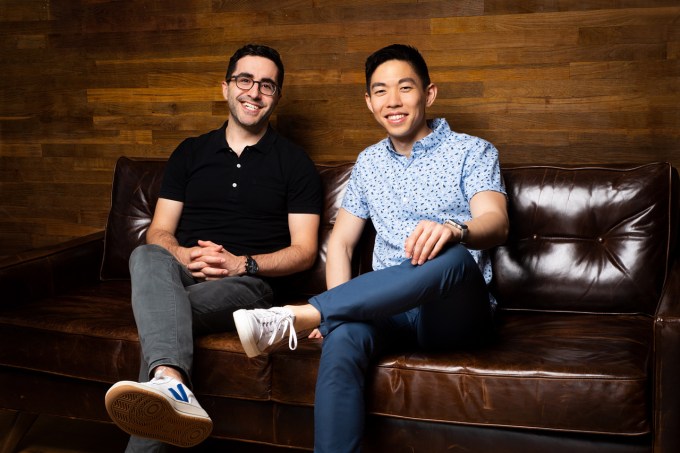
Pico founders Jason Bade and Nick Chen. Photo from Pico.

While there are individual point solutions that may solve each of Pico’s features from payments to email address collection, Chen and Bade are betting that a great out-of-the-box experience with intense focus on conversion and retention can give them a competitive advantage in the marketplace. “When it comes to actually turning on Pico, it’s a matter of minutes. Our whole mantra is we know code,” Chen said. That allows media entrepreneurs to focus on what they do best — producing great content — and allows the Pico team to optimize its product for its customers’ revenue growth and reader satisfaction.

The company’s customer base includes projects funded by the blockchain news network Civil such as the Colorado Sun and Block Club Chicago as well as niche publications like Teslarati, which obsesses about all things Tesla, and ImpactAlpha, which focuses on the impact investing world.

Stripe’s investment follows the unicorn’s expanding engagement with the publishing industry. The company publishes Increment magazine, which analyzes engineering issues, and the company has also formed Stripe Press, which produces books on topics broadly in the startup and engineering space.

Pico joins a couple of different companies targeting the next-generation of media companies. For example, Substack, an SF-based startup, focuses on paid email newsletter businesses in the model of Ben Thompson’s Stratechery.

Ultimately, Pico wants to coin its own segment. As Chen explained, “What we see emerging is this product category of ‘audience relationship management.’ We see it as obviously a subcategory of CRM, but it is distinct.” He welcomes competition to the space. “It’s day one of this shift in the industry. And, you know, if it’s as big as we anticipate, there’s going to be a lot more activity in this space in the next few years.”

29 May 2019

Uber will start deactivating riders with low ratings

Uber is now requiring the same good behavior from riders that it has long expected from its drivers. Uber riders have always had ratings, but they were never really at risk of deactivation — until now. Starting today, riders in the U.S. and Canada are now at risk of deactivation if their rating falls significantly below the city’s average.

“Respect is a two-way street, and so is accountability,” Uber Head of Safety Brand and Initiatives Kate Parker wrote in a blog post. “Drivers have long been required to meet a minimum rating threshold which can vary city to city. While we expect only a small number of riders to ultimately be impacted by ratings-based deactivations, it’s the right thing to do.”

For drivers, they face a risk of deactivation if they fall below 4.6, according to leaked documents from 2015. Though, average ratings are city specific. Uber, however, is not disclosing the average rider rating but says “any rider at risk of losing access will receive several notifications and opportunities to improve his or her rating,” an Uber spokesperson told TechCrunch.

For example, Uber will offer tips to riders around encouraging polite behavior and keeping the car clean.

“Ultimately, we expect this to impact only a very small number of riders,” the spokesperson said.

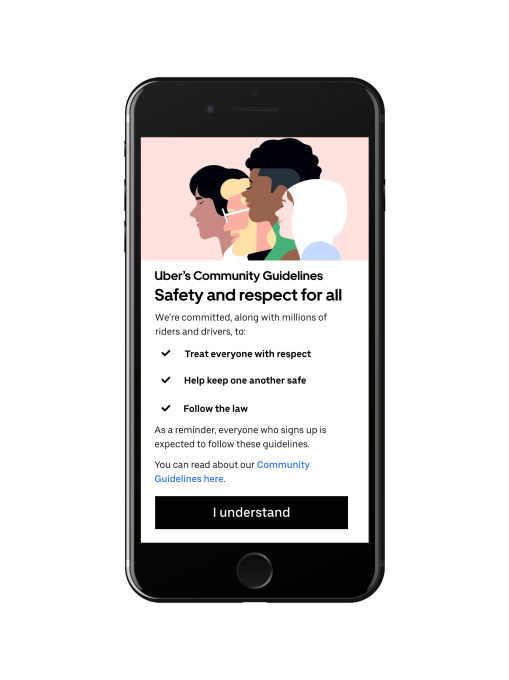
This is part of Uber’s refreshed community guidelines, which will appear front and center on the Uber app and require confirmation of acknowledgment.

29 May 2019

Following FTC complaint, Google rolls out new policies around kids’ apps on Google Play

Google announced this morning a new set of developer policies aimed at providing additional protections for children and families seeking out kid-friendly apps on Google Play. The new policies require that developers ensure their apps are meeting all the necessary policy and regulatory requirements for apps that target children in terms of their content, ads, and how they handle personally identifiable information.

For starters, developers are being asked to consider whether children are a part of their target audience — and, if they’re not, developers must ensure their app doesn’t unintentionally appeal to them. Google says it will now also double-check an app’s marketing to confirm this is the case and ask for changes, as needed.

Apps that do target children have to meet the policy requirements concerning content and handling of personally identifiable information. This shouldn’t be new to developers playing by the rules, as Google has had policies around “kid-safe” apps for years as part of its “Designed for Families” program, and countries have their own regulations to follow when it comes to collecting children’s data.

In addition, developers whose apps are targeting children must only serve ads from an ads network that has certified compliance with Google’s families policies.


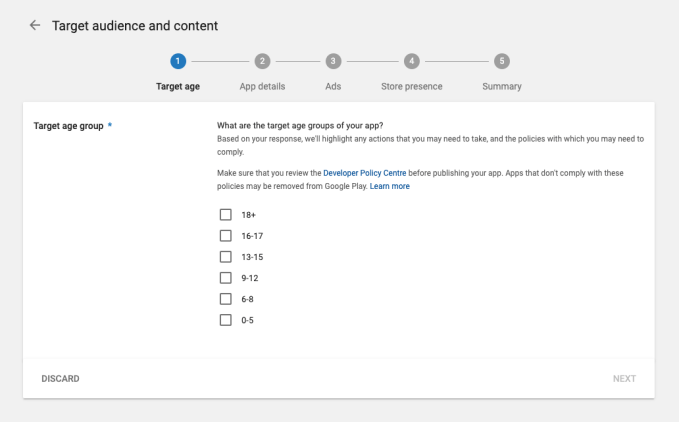
To enforce these policies at scale, Google is now requiring all developers to complete the new target audience and content section of the Google Play Console. Here, they will have to specify more details about their app. If they say that children are targeted, they’ll be directed to the appropriate policies.

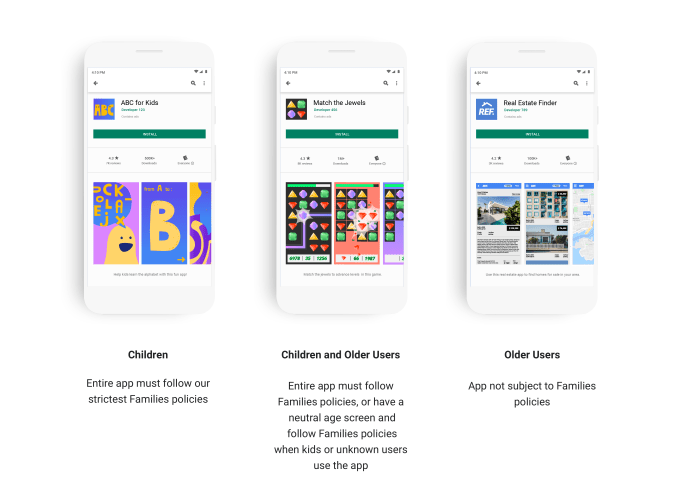
Google will use this information, alongside its review of the app’s marketing materials, in order to categorize apps and apply policies across three target groups: children, children and older users, and older users. (And because the definition of “children” may vary by country, developers will need to determine what age-based restrictions apply in the countries where their app is listed.)

Developers have to comply with the process of filling out the information on Google Play and come into compliance with the updated policies by September 1, 2019.

The company says it’s committed to providing “a safe, positive environment” for kids and families, which is why it’s announcing these changes.

However, the changes are more likely inspired by an FTC complaint filed in December, in which a coalition of 22 consumer and public health advocacy groups, led by Campaign for a Commercial-Free Childhood (CCFC) and Center for Digital Democracy (CDD), asked for an investigation of kids’ apps on Google Play.

The organizations claimed that Google was not verifying apps and games featured in the Family section of Google Play for compliance with U.S. children’s privacy law COPPA.

They also said many so-called “kids” apps exhibited bad behaviors — like showing ads that are difficult to exit or showing those that require viewing in order to continue the current game. Some apps pressured kids into making in-app purchases, and others were found serving ads for alcohol and gambling. And others, still, were found to model harmful behavior or contain graphic, sexualized images, the groups warned regulators.

The time when violations like these can slip through the cracks is long past, thanks to increased regulatory oversight across the online industry by way of laws like the EU’s GDPR, which focuses on data protection and privacy. The FTC is also more keen to act, as needed — it even recently doled out a record fine for TikTok for violating COPPA. 

The target audience and content section are live today in the Google Play Console, along with documentation on the new policies, a developer guide, and online training. In addition, Google says it has also increased its staffing and improved its communications for the Google Play app review and appeals processes in order to help developers get timely decisions and understand any changes they’re directed to make.


29 May 2019

InWin’s Alice is a mid-tower PC case you can match to your cosplay

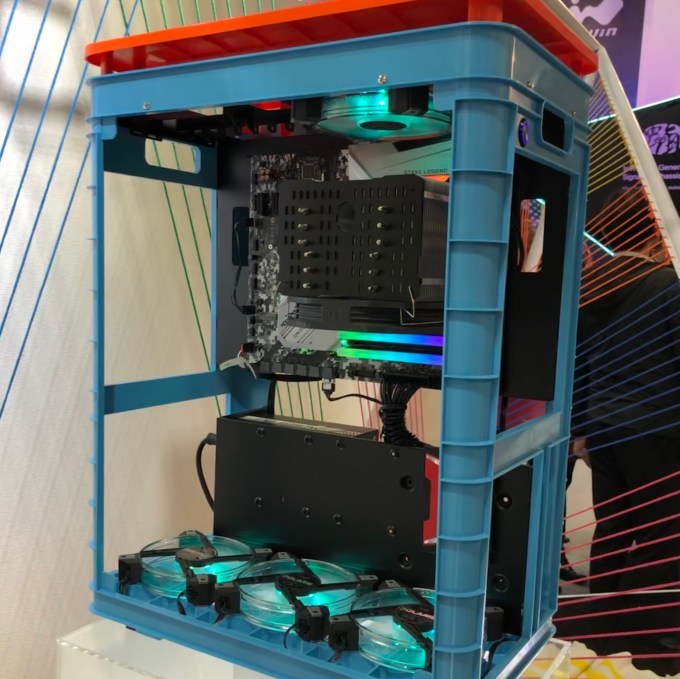
There’s a huge amount of crossover between the gaming and cosplay communities and InWin’s Alice computer chassis will appeal to many in the middle of that Venn diagram. The company is currently showing off Alice and its other PC cases at Computex in Taipei.

The interior of InWin's Alice chassis

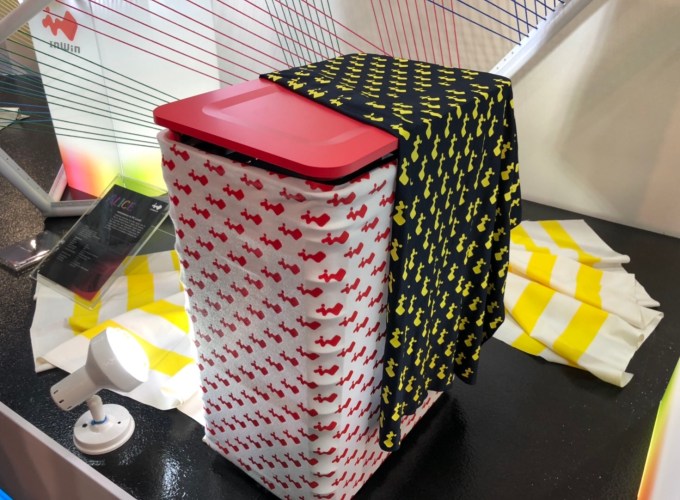
Named after the Lewis Carroll character, the mid tower case comes in several colors of lightweight ABS plastic, but its real draw are its easily removable fabric covers. InWin sells a large array of covers, so you can switch them up, but of course you can also make them. InWin’s Alice covers are designed to be dust-proof, but the concept also has the bonus of allowing for plenty of airflow and making it easy to clean the inside of your PC or change components.

Some of InWin's fabric covers for its Alice PC case

The Alice will be compatible with 12-inch by 9.6 inch ATX, Micro-ATX and Mini-ITX motherboards and is just little over 24-inches tall, with a width of 11.6 inches and a depth of 17.5 inches.