Category: UNCATEGORIZED

16 Apr 2019

Sila Nano’s battery tech is now worth over $1 billion with Daimler partnership and $150 million investment

Sila Nanotechnologies and its battery materials manufacturing technology are now worth over $1 billion.

The company, which announced a $170 million funding led by Daimler and a partnership with the famed German automaker, started building out its first production lines for its battery materials last year. That first line is capable of producing the material to supply the equivalent of 50 megawatts of lithium ion batteries, according to Sila Nano’s chief executive officer Gene Berdichevsky.

That construction, made on the heels of a $70 million investment round, is now going to be expanded with the new cash from Daimler and 8VC along with previous investors Bessemer Venture Partners, Chengwei Capital, Matrix Partners, Siemens Next47, and Sutter Hill Ventures.

Berdichevsky would not comment on how much production capacity would increase, but did say that the company’s battery materials would find their way into consumer devices before the end of 2020. That means the potential for longer lasting batteries in smart watches, earbuds, and health trackers, initially.

From its headquarters in Alameda, Calif., Sila Nanotechnologies has developed a silicon-based anode to replace graphite in lithium-ion batteries. The company claims that its materials can improve the energy density of batteries by 20%.

“If you can increase energy density by 20%… you can use 20% fewer cells and each pack can cost 20% less,” says Berdichevsky. “The subtext of it is that it is the way to drive price of energy storage down. And that’s the way for the electric vehicle market to sand more and more on its own.”

That kind of cost reduction is what brought BMW and Daimler to partner with the company — and what led to the massive funding round and the company’s newfound unicorn status.

Our valuation is over $1 billion dollars now,” Berdichevsky says. 
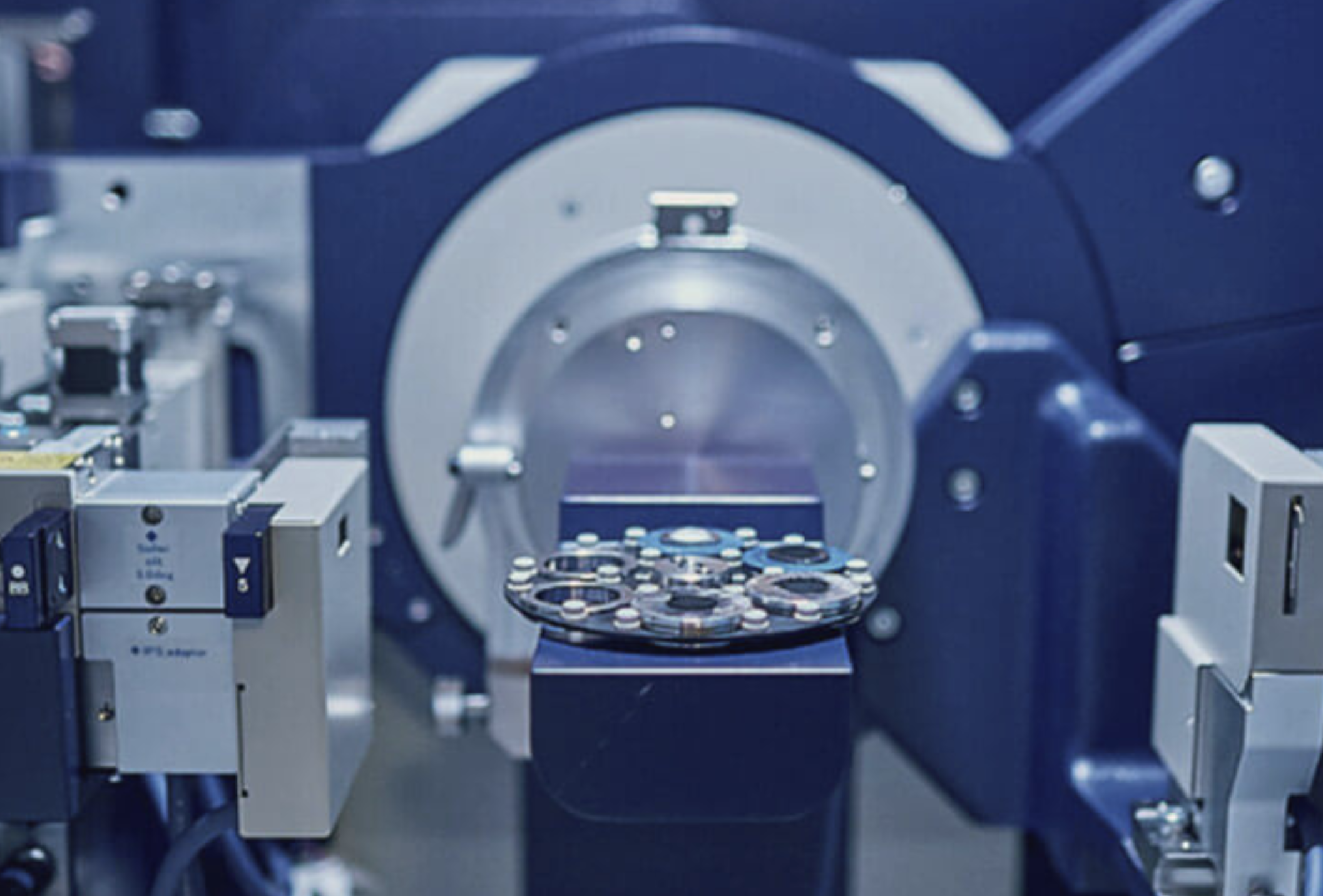
Sila Nanotechnologies

Image courtesy of Sila Nanotechnologies

For Daimler, the materials that Sila Nanotechnologies are developing will give the company’s commitment to electrification a much needed boost.

Mercedes-Benz has plans to electrify its entire product suite by 2022, the company has said. That means Daimler has to accelerate its production of electrified alternatives to its fuel-powered fleet — everything from its 48-volt electrical system (the EQ Boost), to its plug-in hybrids (EQ-Power) and the more than . ten fully electric vehicles powered by batteries or fuel cells. The company is projecting that between 15% and 25% of its total sales will be electric by 2025 — depending on customer preferences, infrastructure development and the regulatory environment in each of the markets in which it sells vehicles, the company said.

In all, Mercedes-Benz cars has committed to investing €10 billion ($11.3 billion) in the production of vehicles and another $1.3 billion into a global battery production network. The global battery production network of Mercedes-Benz Cars will in the future consist of nine factories on three continents.

“We are on our way to a carbon free future mobility. While our all-new EQC model enters the markets this year we are already preparing the way for the next generation of powerful battery electric vehicles,” said Sajjad Khan, Executive Vice President for Connected, Autonomous, Shared & Electric Mobility, Daimler AG in a statement.

Still, consumers shouldn’t expect to see vehicles with Sila Nano’s technology until at least the mid 2020s, as automakers look to prove that the company’s battery technology meets their quality assurance standards. “The qualification time means there’s many years of work to make sure it is reliable for next ten to twenty years,” says Berdichevsky. “Our partnership is geared towards mid-2020s production targets, but the qualification is something that takes quite a while.”

The company’s latest round brings its total financing to just under $300 million since its launch in 2011. And as a result of the latest funding, former General Electric chief executive Jeff Immelt will take a seat on the company’s board of directors.

“Advancements in lithium-ion batteries have become increasingly limited, and we are fighting for incremental improvements,” said Jeff Immelt. “I’ve seen first-hand that this is a huge opportunity that is also incredibly hard to solve. The team at Sila Nano has not only created a breakthrough chemistry, but solved it in a way that is commercially viable at scale.”


16 Apr 2019

Facebook’s Portal will now surveil your living room for half the price

No, you’re not misremembering the details from that young adult dystopian fiction you’re reading — Facebook really does sell a video chat camera adept at tracking the faces of you and your loved ones. Now, you too can own Facebook’s poorly timed foray into social hardware for the low, low price of $99. That’s a pretty big price drop considering that the Portal, introduced less than six months ago, debuted at $199.

Unfortunately for whoever toiled away on Facebook’s hardware experiment, the device launched into an extremely Facebook-averse, notably privacy-conscious market. Those are pretty serious headwinds. Of course, plenty of regular users aren’t concerned about privacy — but they certainly should be.

As we found in our review, Facebook’s Portal is actually a pretty competent device with some thoughtful design touches. Still, that doesn’t really offset the unsettling idea of inviting a company notorious for disregarding user privacy into your home, the most intimate setting of all.

Facebook’s premium Portal+ with a larger, rotating 1080p screen is still priced at $349 when purchased individually, but if you buy a Portal+ with at least one other Portal, it looks like you can pick it up for $249. Facebook advertised the Portal discount for Mother’s Day and the sale ends on May 8. We reached out to the company to ask how sales were faring and if the holiday discounts would stick around for longer and we’ll update when we hear back.

16 Apr 2019

Xbox One does away with discs in new $249 All-Digital Edition

Discs! What are they good for? Well, if they’re nice if you don’t want to be tied to an online-only ecosystem. But if you don’t mind that, Microsoft’s latest Xbox One S “All-Digital Edition” might be for you. With no slots to speak of, the console is limited to downloading games to its drive — which is how we’ve been doing it on PC for quite some time.

Announced during today’s “Inside Xbox” video presentation, the Xbox One S All-Digital Edition — honestly, why not just give it a different letter? — is identical to the existing One S except for, of course, not having a disc slot in the front.

The Xbox One X (left) and S (center) are missing this valuable feature exclusive to the All-Digital Edition (right).

The impact of the news was lessened somewhat by Sony’s strategically timed tease of its next-generation console, revealing little — but enough to get gamers talking on a day Microsoft would have preferred was about its game ecosystem. But to return to the disc-free Xbox.

“We’re not looking to push customers toward digital,” explained Microsoft’s Jeff Gattis in a press release. “It’s about meeting the needs of customers that are digital natives that prefer digital-based media. Given this is the first product of its kind, it will teach us things we don’t already know about customer preferences around digital and will allow us to refine those experiences in the future. We see this as a step forward in extending our offerings beyond the core console gamer.”

The CPU and GPU are the same, RAM is the same, everything is the same. Even, unfortunately, the hard drive: a single lonely terabyte (imagine saying that a few years ago) that could fill up fast if every game has to be downloaded in full rather than loaded from disc.

It’s also the exact same shape and size as the S, which seems like a missed opportunity — they couldn’t make it a little smaller or thinner after taking out the whole Blu-ray assembly? Well, at least the original is a nice looking little box to begin with. (“Changes that affect the form of a console can be complex and costly,” said Gattis.)

At $249 it’s $50 cheaper than the disc-using edition, and comes with copies of Sea of Thieves, Minecraft, and Forza Horizon 3. That’s a pretty decent value, I’d say. If you’re looking to break into the Xbox ecosystem and don’t want to clutter your place with a bunch of discs and cases, this is a nice option. Sea of Thieves had kind of a weak start but has grown quite a bit, FH3 is supposed to be solid, and Minecraft is of course Minecraft.

You may also want to spring for the new Xbox Game Pass Ultimate service, which combines Xbox Live Gold and Xbox Game Pass — meaning you get the usual online benefits as well as access to the growing Game Pass library. There’s enough there now that, with the games you get in the box, you shouldn’t have to buy much of anything until whatever Microsoft announces at E3 comes out. (There’s even a special offer for three months of Game Pass for a buck to get you started).

You can pre-order the All-Digital Edition (which really should have been called the Xbox One D) now, and it should ship and be available at retailers starting May 7.

16 Apr 2019

Unicorns: A tale of two continents

If you’re hoping to create a unicorn on a budget, look to the European technology sector for inspiration. Despite the well-documented increase in available funding for tech companies across the continent, startups are reaching unicorn status with much lower totals of venture capital than U.S. rivals. In fact, this level of “capital efficiency” is one major attraction for international investors weary of the “burn rate” of many U.S. companies aspiring to valuations of $1 billion+.

It costs a staggering 50-100 percent more in the U.S. to create a company valued at $1 billion than in Europe. For U.S. tech companies that achieved unicorn status in 2018, the median amount of funding required was more than $125 million, whereas their contemporaries in Europe required a lesser total of $80 million. For 2017, the gap was even wider; U.S. companies again required just over $100 million, the smaller pool of Europeans slightly above $50 million.

Region         Year Median funding required prior to reaching a valuation of $1B
U.S. 2017 $107 million
Europe 2017 $53.15 million
U.S. 2018 $125.38 million
Europe 2018 $80.8 million

The median funding secured prior to (not including) the round in which tech companies in the U.S. and Europe achieved a $1 billion valuation during 2017/18 (Data source: PitchBook)

A key reason for this greater efficiency in scaling is because European companies have had to make do with less. Europe has historically had a much smaller pool of “late-stage growth” funding (typically rounds of $30-75 million), and even today it is far easier to raise $20 million for a European tech company than $50 million, while that does not hold true in the U.S. to anywhere near the same degree.

This dearth of late-stage money has forced European tech companies to scale more efficiently, with lower overheads and a focus on profitability at an earlier stage, rather than the aggressive growth patterns often witnessed in the U.S. But this “enforced prudence” has come at a price.

The cost of creating more unicorns

Greater capital efficiency has arguably resulted in fewer European tech companies achieving unicorn status, with Europe lagging far behind the number created each year in the U.S. In 2018, the U.S. birthed 53 unicorns; Europe, only 10. So how much funding is required to close the gap?

Let’s assume (safely) product innovation and quality is available both in the U.S. and Europe, and let’s assume (less safely) there are many more quality European companies built to “unicorn potential” that are currently unable to raise enough to fuel scale to the point where they achieve $1 billion valuations. To plug this funding gap, we estimate Europe would require a multi-year capital pool of $10-20 billion in additional late-stage capital.

That math is based on a large number, up to 40, of companies a year missing out on becoming unicorns because of a lack of available funding, alongside the assumption that each unicorn needs more than $100 million in funding in total.

The extremely good news is that it is not $100 billion. Due to the inherent efficiency of risk capital, $10-20 billion can go an awfully long way. Arguably, there is no other industry or sector that can yield such a high return on committed money within a reasonably short few years.

Is it all about the money?

No, Europe is still a trickier market to scale than the U.S. Not only does Europe have to compete with the ready availability of capital in the U.S., but different regulatory environments, language barriers and a brain drain of talent attracted to Silicon Valley all combine to create impediments for European tech companies scaling in an interconnected world.

Funding, however, stands as the simplest of limiting factors to address. Especially when an analysis of the stats shows that whilst European tech companies are “saving” a lot of money, this directly contributes to far fewer of them being worth the mythical $1 billion+. A marginal uplift in capital would produce a disproportionately higher number of unicorns.

16 Apr 2019

Netflix added 9.6M subscribers in Q1, with revenue of $4.5B

Netflix just released its earnings letter for the first quarter of 2019. Teh company says it saw growth of 9.6 million paying subscribers, up 16 percent year-over-year.

That’s significantly ahead of the 8.9 million new subscribers that analysts had predicted. On the financial side, it came in right at expectations, with revenue of $4.5 billion and earnings per share of 76 cents.

The company says it now has 148.9 million paid streaming memberships. Most of this growth (7.9 million of the net additions in Q1) is happening internationally.

Things aren’t looking quite as strong in Q2, with Netflix forecasting 5 million net additions, which would be 8 percent lower than growth during the same period in 2018.

As of 4:36pm Eastern, Netflix shares are down about 1.8 percent in after hours trading, presumably in response to that Q2 forecast.

This comes as Netflix is rolling out significant price hikes in the United States, Brazil, Mexico and parts of Europe.

“The response in the US so far is as we expected and is tracking similarly to what we saw in Canada following our Q4’18 increase, where our gross additions are unaffected, and we see some modest short-term churn effect as members consent to the price change,” the company says.

The letter also includes viewership numbers about a number of Netflix Originals. (Remember: This isn’t an apples-to-apples comparison with standard TV ratings.)

It says “The Umbrella Academy” was viewed by 45 million member households during its first four weeks on the service, “Triple Frontier” was viewed by 52 million households and “The Highwayman” is on-track to be watched by more than 40 million households. On the nonfiction side, the service’s Fyre Festival documentary was viewed by more than 20 million households.

The letter also says Netflix will be testing something new in the product in Q2, by releasing weekly top 10 lists of popular content for U.K. viewers: “For those who want to watch what others are watching, this may make choosing titles even easier.”

And of course, Netflix also faces increasing competition, with Apple and Disney both revealing more details about their upcoming streaming services in recent weeks.

Here’s how the letter discusses thos announcements.:

Both companies are world class consumer brands and we’re excited to compete; the clear beneficiaries will be content creators and consumers who will reap the rewards of many companies vying to provide a great video experience for audiences.

We don’t anticipate that these new entrants will materially affect our growth because the transition from linear to on demand entertainment is so massive ​and because of the differing nature of our content offerings​.

16 Apr 2019

Amazon launches a certification program for Alexa skill developers

Developers building voice-enabled applications for Amazon Echo and other Alexa-powered devices will now have a new way to validate their abilities, with Amazon’s launch of a new AWS Certified Alexa Skill Builder – Speciality certification. This is the first time Amazon has offered a certification program for Alexa developers, the company says.

Certification programs are standard in the technology industry — and AWS already offers a training program and certifications of its own that allow organizations to identify professionals with cloud expertise and an understanding of AWS.

The new Alexa certification will be a speciality within the AWS program, and will validate those with an understanding of all aspects of Alexa voice app development.

This includes the more practical matters — like how to develop, test, validate and troubleshoot skills, the use of the Alexa Developer Console, how to manage skill operations and lifecycles, and more. But it will also get into more high-level concepts, like the “value of voice” and how a voice user experience should flow — something that many Alexa developers today still seem to struggle with.

To get started, developers can review a new exam guide which helps them learn about Alexa skill building through tutorials, technical documentation and more. Amazon is also making self-paced training courses available online.

When ready, developers aiming to get certified can create an AWS Training account, and schedule their exam.

The goal, says Amazon, is to open up “more opportunities to build engaging voice experiences” that can reach customers across the more than 100 million Alexa-enabled devices on the market today.

In other words, Amazon wants those Alexa developers dabbling with skill building to learn not only the basics, but also the industry best practices — then use this knowledge to create more skills that will actually resonate with customers.

The certification program arrives at a time when smart speakers have hit critical mass in the U.S., but the ecosystem of third-party skills has not had its “app store moment” with a breakout hit, as Bloomberg recently noted.

Arguably, music, timers and smart home controls are the breakout hits for smart speakers, but these are native functions. It’s unclear how many of Alexa’s 80K+ third-party skills have a long-term future if consumer adoption continues to struggle.

In the meantime, however, businesses are still keen on the platform, given the sizable installed base for Alexa. Every day, some organization is announcing the launch of its skill. (Today, for example, it’s the Red Cross.)

“The demand from organizations for skilled professionals who can build skills for emerging voice-enabled workloads is increasing,” says Kevin Kelly, director, AWS Certification and Education Programs, in a statement. “This new certification validates those skills with the only credential in the industry focused on Alexa skill building,” he added.


16 Apr 2019

Qualcomm stock skyrockets 23% as Apple legal battle concludes

Qualcomm stock surged after the announcement that the company has settled its multi-billion dollar lawsuits with Apple. At market close Qualcomm’s stock price settled at $70.45 after opening at $57.46.

The stock surge showcases just how surprising the resolution is, especially given how wholeheartedly Apple appeared to be moving forward with Intel to keep Qualcomm tech out of their mobile devices. Qualcomm and Apple had spent the better part of more than two years engaged in a legal skirmish over outsized royalty payments, patent infringements and IP theft.

Beyond the legal resolution and an undisclosed payment from Apple to Qualcomm, the companies announced that they had come to a six-year licensing agreement and a multi-year chipset agreement, a deal that certainly assuages investor fears that the company was risking a relationship with a top customer in order to hold to its royalty guns, a move that carried the risk of damaging relationships with other partners as Apple urged suppliers to halt royalty payments during the dispute as well.

Intel and Apple stock were largely unaffected by the news.

16 Apr 2019

Apple and Qualcomm are ending their legal battles


The years-long legal battle between Apple and Qualcomm appears to be coming to an end.

The two companies have just announced a settlement, with both agreeing to drop all litigation with the other worldwide.

Exact details of the agreement are under wraps, with the two companies only disclosing:

  • A payment (amount undisclosed) is being made from Apple to Qualcomm
  • The two companies are establishing a six-year licensing agreement (with the option to extend by up to two years), and a “multiyear” chipset supply agreement

Qualcomm stock spiked by about 18% with the news.

Story developing…


16 Apr 2019

Daily Crunch: Hands on with the Samsung Galaxy Fold

The Daily Crunch is TechCrunch’s roundup of our biggest and most important stories. If you’d like to get this delivered to your inbox every day at around 9am Pacific, you can subscribe here.

1. Unfolding the Samsung Galaxy Fold

After eight years of teasing a folding device, Samsung finally pulled the trigger with an announcement at its developer’s conference late last year. But the device itself remained mysterious.

Earlier this week, Brian Heater finally held the Galaxy Fold in his hands, and he was pretty impressed.

2. YouTube’s algorithm added 9/11 facts to a live stream of the Notre-Dame Cathedral fire

Some viewers following live coverage of the Notre-Dame Cathedral broadcast on YouTube were met with a strangely out-of-place info box offering facts about the September 11 attacks. Ironically, the feature is supposed to fact check topics that generate misinformation on the platform.

3. Hulu buys back AT&T’s minority stake in streaming service now valued at $15 billion

Disney now has a 67 percent ownership stake in Hulu — which it gained, in part, through its $71 billion acquisition of 21st Century Fox. Comcast has a 33 percent stake.

4. I asked the US government for my immigration file and all I got were these stupid photos

The “I” in question is our security reporter Zack Whittaker, who filed a Freedom of Information request with U.S. Citizenship and Immigration Services to obtain all of the files the government had collected on him in order to process his green card application. Seven months later, disappointment.

5. TikTok downloads ordered to be blocked on iOS and Android in India over porn and other illegal content

Video app TikTok has become a global success, but it stumbled hard in one of the world’s biggest mobile markets, India, over illicit content.

6. Smart speakers’ installed base to top 200 million by year end

Canalys forecasts the installed base will grow by 82.4 percent, from 114 million units in 2018 to 207.9 million in 2019.

7. Salesforce ‘acquires’ Salesforce.org for $300M in a wider refocus on the nonprofit sector

The company announced that it will integrate Salesforce.org — which had been a reseller of Salesforce software and services to the nonprofit sector — into Salesforce itself as part of a new nonprofit and education vertical.

16 Apr 2019

Jack Dorsey says it’s time to rethink the fundamental dynamics of Twitter

Twitter CEO Jack Dorsey took the stage today at the TED conference. But instead of giving the standard talk, he answered questions from TED’s Chris Anderson and Whitney Pennington Rodgers.

For most of the interview, Dorsey outlined steps that Twitter has taken to combat abuse and misinformation, but Anderson explained why the company’s critics sometimes find those steps so insufficient and unsatisfying. He compared Twitter to the Titanic, and Dorsey to the captain, listening to passengers’ concerns about the iceberg up ahead — then going back to the bridge and showing “this extraordinary calm.”

“It’s democracy at stake, it’s our culture at stake,” Anderson said, echoing points made yesterday in a talk by journalist Carole Cadwalladr. So why isn’t Twitter addressing these issues with more urgency?

“We are working as quickly as we can, but quickness will not get the job done,” Dorsey replied. “It’s focus, it’s prioritization, it’s understanding the fundamentals of the network.”

He also argued that while Twitter could “do a bunch of superficial things to address the things you’re talking about,” that isn’t the real solution.

“We want the changes to last, and that means going really, really deep,” Dorsey said.

In his view, that means rethinking how Twitter incentivizes user behavior. He suggested that the service works best as an “interest-based network,” where you log in and see content relevant to your interests, no matter who posted it — rather than a network where everyone feels like they need to follow a bunch of other accounts, and then grow their follower numbers in turn.

Dorsey recalled that when the team was first building the service, it decided to make follower count “big and bold,” which naturally made people focus on it.

“Was that the right decision at the time? Probably not,” he said. “If I had to start the service again, I would not emphasize the follower count as much … I don’t think I would create ‘likes’ in the first place.”

Since he isn’t starting from scratch, Dorsey suggested that he’s trying to find ways to redesign Twitter to shift the “bias” away from accounts and towards interests.

More specifically, Rodgers asked about the frequent criticism that Twitter hasn’t found a way to consistently ban Nazis from the service.

“We have a situation right now where that term is used fairly loosely,” Dorsey said. “We just cannot take any one mention of that word accusing someone else as a factual indication of whether someone can be removed from the platform.”

He added that Twitter does remove users who are connected to hate groups like the Ku Klux Klan and the American Nazi Party, as well those who post hateful imagery or who are otherwise guilty of conduct that violates Twitter’s terms and conditions — terms that Dorsey said the company is rewriting to make them “human readable,” and to emphasize that fighting abuse and hateful content is the top priority.

“Our focus is on removing the burden of work from the victims,” Dorsey said.

He also pointed to efforts that Twitter has already announced to measure (and then improve) conversational health and to use machine learning to automatically detect abusive content. (The company said today that 38 percent of abusive content that Twitter takes action against is found proactively.)

And while Dorsey said he’s less interested in maximizing time spent on Twitter and more in maximizing “what people take away from it and what they want to learn from it,” Anderson suggested that Twitter may struggle with that goal since it’s a public company, with a business model based on advertising. Would Dorsey really be willing to see time spent on the service decrease, even if that means improving the conversation?

“More relevance means less time on the service, and that’s perfectly fine,” Dorsey said, adding that Twitter can still serve ads against relevant content.

In terms of how the company is currently measuring its success, Dorsey said it focuses primarily on daily active users, and secondly on “conversation chains — we want to incentivize healthy contributions back to the network.”

Getting back to Dorsey himself, Rodgers wondered whether serving as the CEO of two public companies (the other is Square) gives him enough time to solve these problems.

“My goal is to build a company that is not dependent upon me and outlives me,” he replied. “The situation between the two companies and how my time is spent forces me immediately to create frameworks that are scalable, that are decentralized, that don’t require me being in every single detail … That is true of any organization that scales beyond the original founding moment.”