Category: UNCATEGORIZED

10 Apr 2019

The first research book written by an AI could lead to on-demand papers

The amount of research that gets published is more than any scholar can hope to keep up with, but soon they may rely on an AI companion to read thousands of articles and distill a summary from them — which is exactly what this team at Goethe University did. You can read the first published work by “Beta Writer” here… though unless you really like lithium-ion battery chemistry, you might find it a little dry.

The paper itself is called, in creative fashion, “Lithium-Ion Batteries: A Machine-Generated Summary of Current Research.” And it is exactly what it sounds like, some 250 pages of this:

The pore structure and thickness of the separator should be carefully controlled, as a satisfactory balance between mechanical strength and ionic electrical conductivity should be kept (Arora and Zhang [40]; Lee and others [33]; Zhang [50]) in order to satisfy these two functions [5]. The pore structure and porosity of the material are clearly quite crucial to the performance of the separator in a battery in addition to the separator material [5].

But as interesting as battery research is, it is only tangential to the actual purpose of this project. The creators of the AI, in an extensive and interesting preface to the book, explain that their intent is more to start a discussion of machine-generated scientific literature, from authorship questions to technical and ethical ones.

In other words, they aim to produce questions, not answers. And questions they have in abundance:

Who is the originator of machine-generated content? Can developers of the algorithms be seen as authors? Or is it the person who starts with the initial input (such as “Lithium-Ion Batteries” as a term) and tunes the various parameters? Is there a designated originator at all? Who decides what a machine is supposed to generate in the first place? Who is accountable for machine-generated content from an ethical point of view?

Having had robust debate already among themselves, their peers, and the experts with whom they collaborated to produce the book, the researchers are clear that this is only a beginning. But as Henning Schoenenberger writes in the preface, we have to begin somewhere, and this is as good a place as any.

Truly, we have succeeded in developing a first prototype which also shows that there is still a long way to go: the extractive summarization of large text corpora is still imperfect, and paraphrased texts, syntax and phrase association still seem clunky at times. However, we clearly decided not to manually polish or copy-edit any of the texts due to the fact that we want to highlight the current status and remaining boundaries of machine-generated content.

The book itself is, as they say, imperfect and clunky. But natural-sounding language is only one of the tasks the AI attempted, and it would be wrong to let it distract from the overall success.

This AI sorted through thousands upon 1,086 papers on this highly technical topic, analyzing them to find keywords, references, takeaways, ” pronominal anaphora,” and so on. The papers were then clustered and organized according to their findings in order to be presented in a logical, chapter-based way.

Representative sentences and summaries had to be pulled from the papers and then reformulated for the review, both for copyright reasons and because the syntax of the originals may not work in the new context. (Experts the team talked to said they should stay as close to the meaning of the original as possible, avoiding “creative” interpretations.)

Imagine that the best sentence from a paper starts with “Therefore, it produces a 24 percent higher insulation coefficient, as suggested by our 2014 paper.”

The AI must understand the paper well enough that it knows what “it” is, and in recasting the sentence, replace “it” with that item, and know that it can do away with “therefore” and the side note at the end.

This has to be done thousands of times and many edge cases pop up where the model doesn’t handle it right or produces some of that admittedly clunky diction. For instance: “That sort of research’s principal aim is to attain the materials with superior properties such as high capacity, fast Li-ion diffusion rate, easy to operate, and stable structure.” Henry James it isn’t, but the meaning is clear.

Ultimately the book is readable and conceivably useful, having boiled down probably ten thousand pages of research to a much more palatable 250. But as the researchers say, the promise is much greater.

The goal here, which doesn’t seem far fetched at all, is to be able to tell a service “give me a 50-page summary of the last 4 years of bioengineering.” A few minutes later, boom, there it is. The flexibility of text means you could also request it in Spanish or Korean. Parameterization means you could easily tweak the output, emphasizing regions and authors or excluding keywords or irrelevent topics.

These and a boatload of other conveniences are inherent to such a platform, assuming you don’t mind a rather stilted voice.

If you’re at all interested in scientific publishing or natural language processing, the preface by the authors is well worth a read.
10 Apr 2019

YouTube TV gets some new channels and a hefty price hike

Cord-cutting services are starting to look a lot more like the services they replaced when it comes to price.

After price bumps in the past couple months hit Hulu Live and DirecTV NOW, YouTube TV is now also seeing a pretty substantial $10-$15 monthly price hike for users, though the new pricing will come with some new content thanks to a Google partnership with Discovery.

Early subscribers paying $35 per month and more recent subscribers $40 per month will soon be paying $50 every month for the TV service which lets you watch live and on-demand shows across multiple devices.

The eight new channels coming on board with the deal are Discovery Channel, HGTV, Food Network, TLC, Investigation Discovery, Animal Planet, Travel Channel and MotorTrend. The Oprah Winfrey Network will also be arriving later this year, notable given the media mogul’s recent partnership with Apple.

Last year, YouTube TV added a number of channels including TNT, Adult Swim, TBS, CNN, and Cartoon Network and tacked on an extra $5 to the service though existing members kept their $35 per month pricing. That’s not the case this time; the company will make the $49.99 per month price standard for all users, though it won’t go into effect for existing users until their next billing cycle after May 13. Subscribers who pay through Apple will have to fork up $54.99.

What if you don’t want to pay extra money for all of these new channels that you might not even watch? Well, then I guess you’re left with one of your original complaints from before these cord-cutting services first launched.

While there are obviously plenty of things to keep users from Comcast, the company is kind of laying out an unattractive bid for future customers if they’re just going to uniformly jack up the price every time they reach a worthwhile deal with a major network. Interestingly, Google will be letting users add EPIX as an a la carte premium package, but they won’t be giving users the options to do this with the other new channels.

10 Apr 2019

The right way to do AI in security

Artificial intelligence applied to information security can engender images of a benevolent Skynet, sagely analyzing more data than imaginable and making decisions at lightspeed, saving organizations from devastating attacks. In such a world, humans are barely needed to run security programs, their jobs largely automated out of existence, relegating them to a role as the button-pusher on particularly critical changes proposed by the otherwise omnipotent AI.

Such a vision is still in the realm of science fiction. AI in information security is more like an eager, callow puppy attempting to learn new tricks – minus the disappointment written on their faces when they consistently fail. No one’s job is in danger of being replaced by security AI; if anything, a larger staff is required to ensure security AI stays firmly leashed.

Arguably, AI’s highest use case currently is to add futuristic sheen to traditional security tools, rebranding timeworn approaches as trailblazing sorcery that will revolutionize enterprise cybersecurity as we know it. The current hype cycle for AI appears to be the roaring, ferocious crest at the end of a decade that began with bubbly excitement around the promise of “big data” in information security.

But what lies beneath the marketing gloss and quixotic lust for an AI revolution in security? How did AL ascend to supplant the lustrous zest around machine learning (“ML”) that dominated headlines in recent years? Where is there true potential to enrich information security strategy for the better – and where is it simply an entrancing distraction from more useful goals? And, naturally, how will attackers plot to circumvent security AI to continue their nefarious schemes?

How did AI grow out of this stony rubbish?

The year AI debuted as the “It Girl” in information security was 2017. The year prior, MIT completed their study showing “human-in-the-loop” AI out-performed AI and humans individually in attack detection. Likewise, DARPA conducted the Cyber Grand Challenge, a battle testing AI systems’ offensive and defensive capabilities. Until this point, security AI was imprisoned in the contrived halls of academia and government. Yet, the history of two vendors exhibits how enthusiasm surrounding security AI was driven more by growth marketing than user needs.

10 Apr 2019

Prince Harry is partnering with Oprah Winfrey on Apple TV+ series about mental health

Prince Harry is the latest big name attached to Apple’s upcoming streaming service, Apple TV+, which was formally introduced last month. According to an announcement published to Prince Harry and Meghan Markle’s official Instagram account, Prince Harry and Oprah Winfrey are co-creators and executive producers on an Apple TV+ docuseries focused on mental health.

“I truly believe that good mental health – mental fitness – is the key to powerful leadership, productive communities and a purpose-driven self,” said Prince Harry, in a statement.

“It is a huge responsibility to get this right as we bring you the facts, the science and the awareness of a subject that is so relevant during these times. Our hope is that this series will be positive, enlightening and inclusive – sharing global stories of unparalleled human spirit fighting back from the darkest places, and the opportunity for us to understand ourselves and those around us better. I am incredibly proud to be working alongside Oprah on this vital series,” he shared.

Oprah’s involvement with Apple TV+ was first announced in June 2018, with news that she signed a multi-year deal to produce original content for Apple’s then still unnamed streaming service.

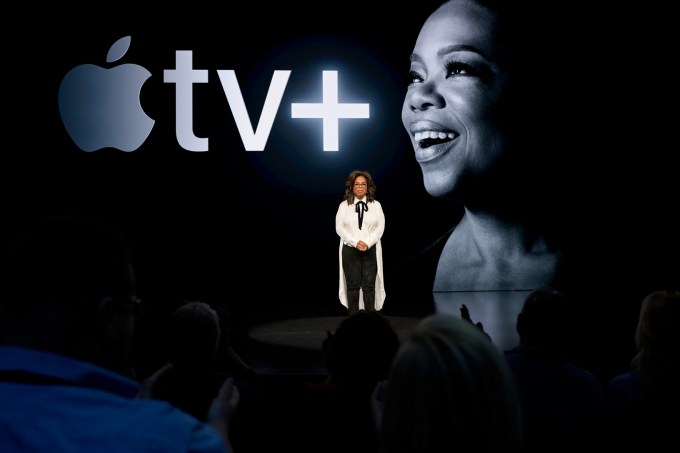
At Apple’s press event in March, the company brought Winfrey on stage to offer more details about what she had planned. That includes “Toxic Labor,” a documentary that examines the effects of sexual harassment in the workplace, and another untitled multi-part series about mental health.

Prince Harry’s involvement was not mentioned at the time.

However, he has been involved for several months, today’s announcement states.

The series, according to Winfrey, will look at how “the scourge of depression, and anxiety, post-traumatic stress, addiction, trauma, and loss, is just devastating lives daily across the globe.” The show, if it does its job right, aims to replace shame and stigma around mental health issues with “compassion and honesty,” she had said.

The topic of mental health is one Prince Harry has been focused on himself, before agreeing to co-produce the series.

As the announcement explains:

“The dynamic multi-part documentary series will focus on both mental illness and mental wellness, inspiring viewers to have an honest conversation about the challenges each of us faces, and how to equip ourselves with the tools to not simply survive, but to thrive.

This commitment builds on The Duke of Sussex’s long-standing work on issues and initiatives regarding mental health, where he has candidly shared personal experience and advocated for those who silently suffer, empowering them to get the help and support they deserve.”

Winfrey also went on “CBS This Morning” to talk more about mental health, the series, and how she came to partner with Prince Harry on the project.

She had asked him what he thought were the most important issues facing the world, and he had replied with two: climate change and mental health.

“As you know, he’s spoken about his own issues and what he went through after his mother died and how being able to talk about it has benefitted him,” Winfrey told CBS. “It’s a passion of his and at the end of the conversation, I said, ‘Oh, I’m going to be doing this thing with Apple. I said it’s a big concern of mine, too … And I was telling him about this Apple platform and he said at the end of the conversation, ‘If there’s anything I can do to help.’ And I go ‘as a matter of fact…”

The multi-part docuseries still doesn’t have a name, but will arrive in 2020 following the public debut of Apple TV+, scheduled for later this fall. 


10 Apr 2019

The startup behind Walmart’s shelf-scanning robots

Earlier this week, Walmart announced a wide-scale expansion of in-store technology. The news came, of course, as the superstore chain is fighting Amazon’s encroachment with everything it has. The list includes several robotics technologies — a category in which Amazon has been invested for several years, beginning with the acquisition of Kiva systems in 2012.

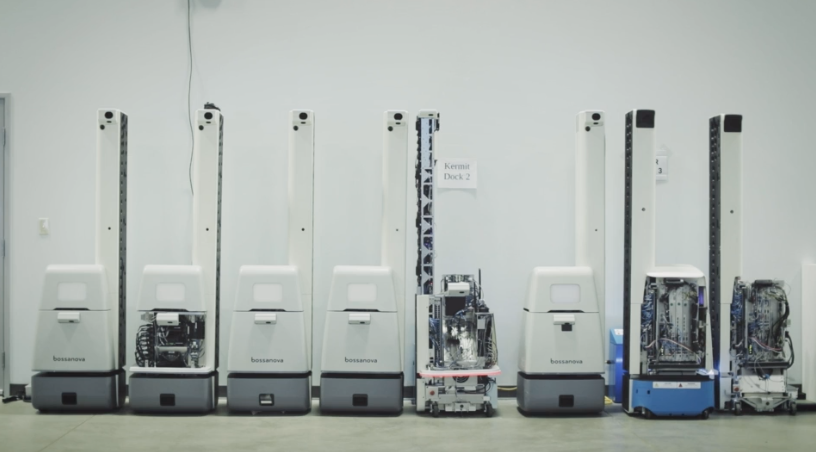
Pittsburgh startup Bossa Nova Robotics has been a big player in Walmart’s ambitions for a while now, as well. Back in 2017, the retail giant announced that it would be rolling out Bossa Nova’s shelf-scanning robots in 50 of its stores.

We paid a visit to the company on a recent trip to the Steel City. The company’s out-of-the-way headquarters are housed in a massive warehouse. Past the nondescript front offices, where employees work at computers, is a cavernous area that’s home to a workshop for iterating its robots, coupled with large aisles of shelves designed to mimic the stores where the technologies will eventually be deployed.

The shelves are stocked with groceries that will look immediately familiar to anyone who’s spent time in an American supermarket. There are clothing items on hangers, as well, along with a series of technology toys that offer a small peek into Bossa Nova’s not-so-distant history.

There’s Penbo, the interactive robotic penguin, who’s perpetually pregnant with an egg. And, of course, Prime 8, the programmable gorilla that runs on his two prominent forearms. The products made it to market with limited success, mostly failing to predict the fickle whims of tech-crazy kids.

While the company was created in 2005 when its founders were PhD students at nearby Carnegie Mellon, it wasn’t until it opted for something more mundane that it really truly found its way.

Capitalizing on the “dull” aspect of automation’s “Three Ds,” the company developed a system capable of taking inventory of store shelves.

“If you think about it, what’s the last innovation that’s happened in a store?,” CTO and co-founder Sarjoun Skaff asks rhetorically. “I can think of self-checkouts and barcodes, really. And retailers have always been very good at tracking a product through the supply chain — from the manufacturer, on the boat, through customs and the distribution center. When it hits the stores, it’s a black box. It’s anyone’s guess whether it’s on the shelf, it’s in a back room, whether there’s some theft or a misplaced product.”

Bossa Nova’s system is capable of tracking boxes and making sure things are where they should be. It’s a surprisingly complex task, especially in stores as large as the ones run by Walmart . It’s also incredibly dull and repetitive — as someone who’s worked in retail, I can attest to this.

Like many in the automation business, however, Skaff balks at the suggestion that the technology will replace human employees — at least in the short term.

“Our robot doesn’t have arms right now, so it’s not replacing the manual labor of restocking a shelf,” he says. “It’s displacing the tedious task of looking for problems, which is really mind-numbing. And in large stores, it’s really hard for a human to compete. Associates have had to do it, because there was no alternative. As soon as we can tell you where the problems are, you can spend your time fixing them, restocking the shelves and spending more time with shoppers.”

Walmart’s certainly been invested in the company. The retailer was Bossa Nova’s first major partner, after piloting the technology in some smaller stores. Even with a relatively small number like 50 locations, the deal was an acceleration from 0-60 for a startup of Bossa Nova’s size, as it worked to create custom versions of its autonomous scanners.

A full list of partner stores hasn’t been released, but if you’re lucky, you can catch one of its robots cruising up and down the aisles of a local supermarket, three times a day. As for whether Walmart might eventually absorb Bossa Nova, as Amazon did with Kiva, Skaff is cautious.

“What we would like to do is serve the entire industry, because fundamentally, the problem we’re solving is universal,” he explains. “The entire world has the problem, and nobody has a solution. For large stores, the best solution is a combination of robotics and AI.”

10 Apr 2019

Daily Crunch: Meet the new CEO of Google Cloud

The Daily Crunch is TechCrunch’s roundup of our biggest and most important stories. If you’d like to get this delivered to your inbox every day at around 9am Pacific, you can subscribe here.

1. Google Cloud’s new CEO on gaining customers, startups, supporting open source and more

Thomas Kurian, who came to Google Cloud after 22 years at Oracle, said the team is rolling out new contracts and plans to simplify pricing.

Most importantly, though, Google will go on a hiring spree: “A number of customers told us ‘we just need more people from you to help us.’ So that’s what we’ll do.”

2. Walmart to expand in-store tech, including Pickup Towers for online orders and robots

Walmart is doubling down on technology in its brick-and-mortar stores in an effort to better compete with Amazon. The retailer says it will add to its U.S. stores 1,500 new autonomous floor cleaners, 300 more shelf scanners, 1,200 more FAST Unloaders and 900 new Pickup Towers.

3. Udacity restructures operations, lays off 20 percent of its workforce

The objective is to do more than simply keep the company afloat, according to co-founder Sebastian Thrun. Instead, Thrun says these measures will allow Udacity to move from a money-losing operation to a “break-even or profitable company by next quarter and then moving forward.”

Photo By Bill Clark/CQ Roll Call via Getty Images

4. The government is about to permanently bar the IRS from creating a free electronic filing system

That’s right, members of Congress are working to prohibit a branch of the federal government from providing a much-needed service that would make the lives of all of their constituents much easier.

5. Here’s the first image of a black hole

Say hello to the black hole deep inside the Messier 87, a galaxy located in the Virgo cluster some 55 million light years away.

6. Movo grabs $22.5M to get more cities in LatAm scooting

The Spanish startup targets cities in its home market and in markets across Latin America, offering last-mile mobility via rentable electric scooters.

7. Uber, Lyft and the challenge of transportation startup profits

An article arguing that everything you know about the cost of transportation is wrong. (Extra Crunch membership required.)

10 Apr 2019

Google Cloud takes aim at verticals starting with new set of tools for retailers

Google might not be Adobe or Salesforce, but it has a particular set of skills, which fit nicely with retailer requirements and can over time help improve the customer experience, even if that means just simply making sure the website or app is running, even on peak demand. Today, at Google Cloud Next, the company showed off a package of solutions as an example its vertical strategy.

Just this morning, the company announced a new phase of its partnership with Salesforce, where it’s using its contact center AI tools and chatbot technology in combination with Salesforce data to produce a product that plays to each company’s strengths and helps improve the customer service experience.

But Google didn’t stop with a high profile partnership. It has a few tricks of its own for retailers, starting with the classic retailer Black Friday kind of scenario. The easiest way to explain the value of cloud scaling is to look at a retail event like Black Friday when you know servers are going to be bombarded with traffic.

The cloud has always been good at scaling up for those kind of events, but it’s not perfect, as Amazon learned last year when it slowed down on Prime Day. Google wants to help companies avoid those kinds of disasters because a slow or down website translates into lots of lost revenue.

The company offers eCommerce Hosting, designed specifically for online retailers, and it is offering a special premium program, so retailers get “white glove treatment with technical architecture reviews and peak season operations support…” according to the company. In other words, it wants to help these companies avoid disastrous, money-losing results when a site goes down due to demand.

In addition, Google is offering real-time inventory tools, so customers and clerks can know exactly what stock is on hand, and it’s applying its AI expertise to this, as well with tools like Google Contact Center AI solution to help deliver better customer service experiences or Cloud Vision technology to help customers point their cameras at a product and see similar or related products. They also offer Recommendations AI, a tool, that says, if you bought these things, you might like this too, among other tools.

The company counts retail customers like Shopify and Ikea. In addition, the company is working with SI partners like Accenture, CapGemini and Deloitte and software partners like Salesforce, SAP and Tableau.

All of this is about creating a set of services created specifically for a given vertical to help that industry take advantage of the cloud. It’s one more way for Google Cloud to bring solutions to market and help increase its marketshare.

10 Apr 2019

Net neutrality restoring Save the Internet Act passes House, moving on to Senate

A bill intended to restore 2015’s net neutrality rules has passed in the House of Representatives 232-190, and will soon be in consideration in the Senate. The ‘Save the Internet Act’ may be doomed to an eventual veto, but its broad support among voters and the relatively bipartisan push in Congress make it an important one to follow regardless.

The act was introduced in March, and is little more than a re-establishment of the FCC’s 2015 rules with Congressional approval and removing the ones they were replaced with in late 2017.

The bill was introduced and debated yesterday by its many co-sponsors, including House Speaker Nancy Pelosi (D-CA), though it was primarily Rep. Doyle (D-PA) who defended the bill against the crusty arguments of its detractors and gamely accepted a handful of amendments that did not affect the meat of the bill.

In the first amendment, Rep. Burgess (R-TX) asked that the Government Accountability Office issue a report on the potential effect of edge providers on internet freedoms. As we’ve discussed many times before, this red herring argument has to do with an entirely different industry and domain of regulation, and both can and should be looked at — in a bill or investigation of its own. But the report is nonbinding and nonpartisan so it was accepted.

The second, much more ridiculous amendment requires the FCC to list the 700 parts of the Communications Act that the 2015 rules does not invoke. In fact, these forbearances are comprehensively detailed in the rules themselves, which have for years been public and extensively documented and analyzed.

Responding to this request, Doyle was in good humor: “Importantly, this wasn’t an issue at all when these rules were in place for nearly 3 years,” he said. “I’m amazed you didn’t have the list already, Greg, that’s your good friend over there [i.e. FCC Chairman Ajit Pai] and I’m sure a quick phone call would have done it.”

A third amendment, from Rep. Waters (D-CA) commissioned a second report from the GAO, “on the importance of net neutrality and what access to the internet means to vulnerable communities” such as the poor, disabled, elderly, and ethnic minorities. This was accepted without argument, as you can imagine.

A fourth amendment commissioned a third report from the GAO on the benefit and necessity of offering standalone broadband, as opposed to having it bundled with cable, landlines, and other services. This too was accepted without (meaningful) argument.

A fifth requires the FCC to tell Congress what fines it has imposed on ISPs as well as what it actually collected. This information isn’t top secret or anything, so this requirement seems redundant, but the more documentation the better.

The sixth amendment requires the FCC to issue a report on how it would improve the Form 477 data, the self-reported information from internet providers about their coverage and broadband offerings. It is continually found to be more than a little inaccurate, and the FCC itself has been looking into making it better as well.

Are you beginning to see how a two-page law like this one grows to many times its size? At least, however, these amendments are non-destructive and may even prove salutary to future efforts to improve broadband and regulation.

At all events the bill passed today 232-190. Its proponents cheered its success:

“The American people are rightfully demanding that critical net neutrality protections be restored in law, and I’m hopeful this strong House vote helps build momentum for action in the Senate,” said Rep. Pallone (D-NJ) in a statement.

“Today, the House took a firm stand on behalf of internet users across the country,” wrote Mozilla. “We hope that the Senate will recognize the need for strong net neutrality protections and pass this legislation into law. In the meantime, we will continue to fight in the courts as the DC Circuit considers Mozilla v. FCC, our effort to restore essential net neutrality protections for consumers through litigation.”

FCC Chairman Ajit Pai denounced the “so-called” Save the Internet Act: “This legislation is a big-government solution in search of a problem. The Internet is free and open, while faster broadband is being deployed across America. This bill should not and will not become law.”

But his colleague, Commissioner Jessica Rosenworcel, has a different story: “Their legislative effort gets right what the FCC got so wrong. When the agency rolled back net neutrality protections, it gave broadband providers the power to block websites, throttle services, and censor online content. This decision put the FCC on the wrong side of history, the wrong side of the law, and the wrong side of the American public.”

The bill may be, as Senate Majority Leader Mitch McConnell has called it, “dead on arrival” in the Senate, and the White House has implied its own hostility. But the legislation is popular and the issue a highly visible one that voters will be considering in the 2020 elections. So there may be those in the Senate who will cross the line. We’ll know when it is set forth for consideration there.

10 Apr 2019

Google’s managed database service to support Microsoft SQL Server

It’s not every day that you read a headline with both Google and Microsoft. Google is announcing today that its managed database service Cloud SQL will soon support Microsoft SQL Server. The company showed a sneak preview at its Google Cloud Next conference.

The message is clear — if your company uses Microsoft SQL Server database, you don’t have to use Microsoft Azure. Your database will work just fine on Google’s Cloud SQL.

Google already supported Microsoft SQL Server in traditional virtual machines — so you had to manage it yourself. If you have a license and you want Google to manage your database for you, Cloud SQL will be able to do it. No backup, no manual replication, no patch, etc.

Many enterprise customers still rely heavily on a traditional on-prem server infrastructure. Google is trying to remove all the obstacles you could find when moving to the cloud.

In other Cloud SQL news, customers who use PostgreSQL can now use version 11 of PostgreSQL. Amazon RDS also supports version 11.

Finally, Google’s managed NoSQL database service Cloud Bigtable now supports multi-region replication. That feature was already available in beta. You can now safely read and write your NoSQL data from multiple regions at the same time.

10 Apr 2019

Uber is expected to seek $10 billion in IPO

Uber is reportedly making its S-1 publically available tomorrow, according to Reuters. According to the IPO paperwork, Uber will sell around $10 billion worth of stock, Reuters sources say. If true, Uber’s IPO would be one of the G.O.A.T. (greatest of all time) in the tech industry since Alibaba’s 2014 IPO.

While previous reports have pegged Uber’s valuation at around $120 billion, Uber is reportedly seeking a valuation of between $90 billion and $100 billion. That decrease is reportedly influenced by Lyft’s performance on the public market. Still, that valuation is higher than its last valuation of $76 billion following a funding round.

The expected arrival of the S-1 tomorrow puts Uber on track to begin its IPO roadshow at the end of this month, and list on the New York Stock Exchange in early May. TechCrunch has independently learned Uber is indeed expected to list next month.

We’ve reached out to Uber and will update this story if we hear back.