Category: UNCATEGORIZED

03 Apr 2019

Early-stage VC byFounders closes €100M fund to back Nordics and Baltics startups

ByFounders, a relatively new early-stage venture capital firm targeting the Nordic and Baltic regions of Europe, is officially launching its first fund today.

The debut fund has closed at €100 million and will be used to back tech startups at pre-seed, seed and in some instances Series A. ByFounders will also do follow on investments to maintain pro-rata ownership in its most promising portfolio companies.

However, what perhaps makes byFounders stand out from the crowd is its LP structure. Along with institutional investors, such as anchor investor Danish Growth Fund, byFounders’ backers includes more than 50 entrepreneurs.

Dubbed the “Collective,” the group of individual LPs include founders behind some of the region’s most renowned companies including Skype, Zendesk, Kahoot, Unity, Tradeshift, Sitecore and Vivino.

The idea is that byFounders portfolio companies can benefit from unique access to “deep industry and operational knowledge” — from scaling, recruiting, international expansion to raising further funding — in addition the Collective’s global network and ties to Silicon Valley.

ByFounders’ other institutional investors are Isomer Capital, Draper Esprit, Digital Garage, Danske Bank, as well as a number of prominent family businesses from the Nordics.

Founded by Eric Lagier and Tommy Andersen, the VC firm has offices in Copenhagen and San Francisco and has already backed 11 startups: Corti, Peergrade, Simple Feast, Cobalt, Spiio, SafetyWing, Drugstars, Omnio, Qurasense, Tame and Uizard. It plans to make a further 30 investments over the next three years.

Below follows an email Q&A with byFounders Managing Partner Eric Lagier, where we discuss the fund’s remit, how byFounders’ LP network aims to give it an edge, ties to Silicon Valley, and the thorny issue of Brexit.

TC: byFounders says its sweet spot is seed and occasionally Series A rounds. Can you be more specific with regards to stage and cheque size you plan to write?

EL: byFounders’ €100m fund size and operational guidance from our 50-strong collective of the region’s most successful entrepreneurs means that we’re able to engage early with initial investments of e.g. €200.000 in pre-seed in companies like UIzard, Safetywing and Qurasense, onto €1-2m seed stage rounds like Corti and Omnio, and even do larger Series A rounds of up to €5m. The latter, we’ve done with the likes of Cobalt and SimpleFeast as they expand internationally. Our approach means we still reserve a large pool of capital to protect our ownership pro rata in later stages.

TC: What are the types of companies, technologies, business models or sectors you are focussing on?

EL: Evidently, our current portfolio is a mix of tech companies across verticals like healthtech, edtech, fintech, foodtech, IoT, B2C and B2B. Common to all of them is that they’re founded by great Nordic and Baltic teams with global ambitions. Successfully scaling a business is incredibly hard, but it’s crucial to do so almost from day one. We created byFounders to give the next generation of new Nordic entrepreneurs access to the collective learnings and leaders behind today’s unicorns.

TC: What can we expect byFounders to bring to the Nordics that doesn’t already exist, aside from another €100 million of venture capital?

EL: What sets us apart is the depth and breadth of our industry expertise and practical advice on offer from more than 50 people who have faced and overcome the challenges that you will meet as a founder.

Each member of the Collective is actively involved with our portfolio companies and they have all invested in the fund. We are basically inviting the next generation of founders into the “hall of fame” of Nordic and Baltic founders. The energy and potential unleashed from this is unparalleled.

TC: You say that a shortage of local funding sources has pushed many Nordic and Baltic startups to relocate to the U.S., but why is this a problem?

EL: Historically, many Nordic tech companies like Skype, Unity, Zendesk, Tradeshift have had to relocate in their pursuit for capital, talent and markets. The emergence of Northzone and Creandum, namely in Sweden, meant that companies like Spotify, Klarna, iZettle were able to stay local and help build a strong tech community that continues to feed and accelerate local entrepreneurship and the number of startups created here.

The good news is that many of the founders that once upon a time left the Nordics and Baltics, like Sten Tamkivi (Skype, Teleport), Jakob Jønck (Endomondo, SimpleFeast), Morten Primdahl (Zendesk), David Helgason (Unity), Michael Drejer (ProPeople) and Mikkel Hippe Bruun (Tradeshift) have all returned from Silicon Valley by now. They represent a huge untapped potential of knowledge that we are unleashing to help the next generation of founders.

The reality is that today you don’t need to relocate your business to get funding and be successful. This is a trend we’re increasingly seeing and contributing to in the Nordics.

The Nordics and Baltics have incredibly strong ecosystems that have in part been created by the willingness of our governments to work with entrepreneurs and tech companies, as well as by universities and society embracing tech-focused education. I believe the change in dynamics, in part, has been caused by seeing companies relocate, making nations’ lose out on wealth creation and a highly skilled workforce.

TC: You claim to have 50+ founders as LPs. Will this also be how you source deal-flow or how might this be a competitive advantage for the startups you back?

EL: More than one-third of all our deal-flow is generated by our 50+ byFounders Collective. We benefit from getting strong, qualified endorsements of new investment opportunities from our network of proven founders. In terms of our portfolio companies, our Collective represents unparalleled access to knowledge, expertise and networks. You can get capital anywhere these days, but with byFounders you get qualified operational guidance and game changing introductions which increases the likelihood of your success as a founder.

TC: How does byFounders think about Brexit? Are you long or short on the UK leaving the EU and does it have any bearing on the Nordics ecosystem?

EL: Despite Brexit, London looks likely to retain its position as the VC capital of Europe for now, but it’s still uncertain how access to talent and access to markets will be impacted. We all know that any tech startup’s success depends on the trinity of access to capital, talent and markets and byFounders is further strengthening the Nordic ecosystem at a time of uncertainty across the region.

TC: You are talking up byFounders’ ability to build bridges to Silicon Valley. Can you be more specific?

EL: You no longer need to leave the Nordic region to build a world leading tech company, but at the same time it is a massive tailwind to have someone on the ground in Silicon Valley that can help fast track you into the right conversations.

After Skype and Tradeshift, I moved to San Francisco where I have lived for the past eight years building and then exiting my own startup to HP and serving as advisor for 500Startups. During this time, I have built up a strong network of other tech entrepreneurs and investors that have helped bring scale and growth to early stage companies.

Many Nordic and Baltic founders venture to Silicon Valley to address a global market, yet it’s the equivalent of entering this new room in complete darkness and stumbling their way around. The majority of our 50+ byFounders Collective either live or have lived here, and together we help “turn the light switch on” and put our portfolio companies on a fast track to access additional capital, talent and billion $ markets.

TC: What is the biggest change you’ve seen within the Nordics (and Baltics) ecosystem in the last 5 years, and what needs to happen next to maintain the current momentum?

EL: Standing on the shoulders of success of Skype, Spotify, Zendesk, Tradeshift, Unity, etc, it’s been very encouraging to experience how the Nordic and Baltic ecosystem have grown an identity of its own as a global tech hub. Never has the region been able to attract so much attention from investors. As an example, three of Sequoia Capital’s best performing portfolio companies are from here – Unity (Denmark), Klarna (Sweden) and Medalia (Norway).

This also means that even though we are doing great, we need to work together and keep supporting each other across borders in order to keep punching above our weight globally. We see byFounders playing an important role in facilitating this and helping to maintain the momentum.

TC: What is the biggest threat to the continued success of the Nordics tech ecosystem?

EL: As the Nordic tech ecosystem scales rapidly, we quickly face resource constraints given our small local pool of talent and high barriers to entry. Key to success going forward is for us to attract talent from outside the Nordics and to retain them.

TC:. Does the tech press pay enough attention to the region, given it has produced a number of Europe’s most successful tech companies in recent times? If the answer is no, what is the one Nordics story that you feel no one has yet properly told?

EL: No. We all know too well the stories of the creation of Facebook, Google, Amazon etc, while few actually know the story of Nordic and Baltic unicorns Skype, Zendesk, Spotify, Supercell, Klarna, iZettle, Unity, Transferwise, Taxify, Rovio, Sitecore, JustEat, Tradeshift, etc. The common denominator is that they succeeded “against all odds”.

With byFounders, we have come together because we have strong stories to tell and we want to help guide the next generation of Nordic and Baltic founders to build global companies, however, this time not “against all odds”.

03 Apr 2019

Uber may have left Southeast Asia but its APAC HQ remains in Singapore

Uber exited Southeast Asia last year after it sold its local business to Grab but it continues to remain in Singapore, where it has now opened a new regional HQ for Asia Pacific and is hiring for staff.

The company — which is headed for IPO imminently — won’t be restarting its service, however, which puts it in a rather interesting position in Singapore.

The writing has been on the wall for some time, though. TechCrunch reported last August that Uber was on a hiring spree in Singapore, and now that has come to fruition with the opening with a new 2,000 sq meter office near the Central Business District in Singapore. That’ll function as the management center for the nine markets that Uber operates in across Asia Pacific, which include Japan, Korea and Australia. India, Uber’s second largest market, is managed separately to the rest of the continent.

Uber’s Southeast Asia sale — which saw it take a tactical 27.5 percent stake in its Singapore-based rival — gave Grab first refusal on a lot of Uber’s operational talent, but most of Uber’s core management team remained with the company in Singapore. For example, Brooks Entwistle, who was hired as chief business officer for Asia Pacific in 2017, remains stationed there as Uber’s international chief business officer.

Straits Times reports that Uber’s Singapore headcount is at least 165 with some 17 vacancies open right now. As we reported last year, the company was aiming to hire at least 75 roles to take its Singapore-based team to over “well over” 100 — it seems that it did that and then some.

03 Apr 2019

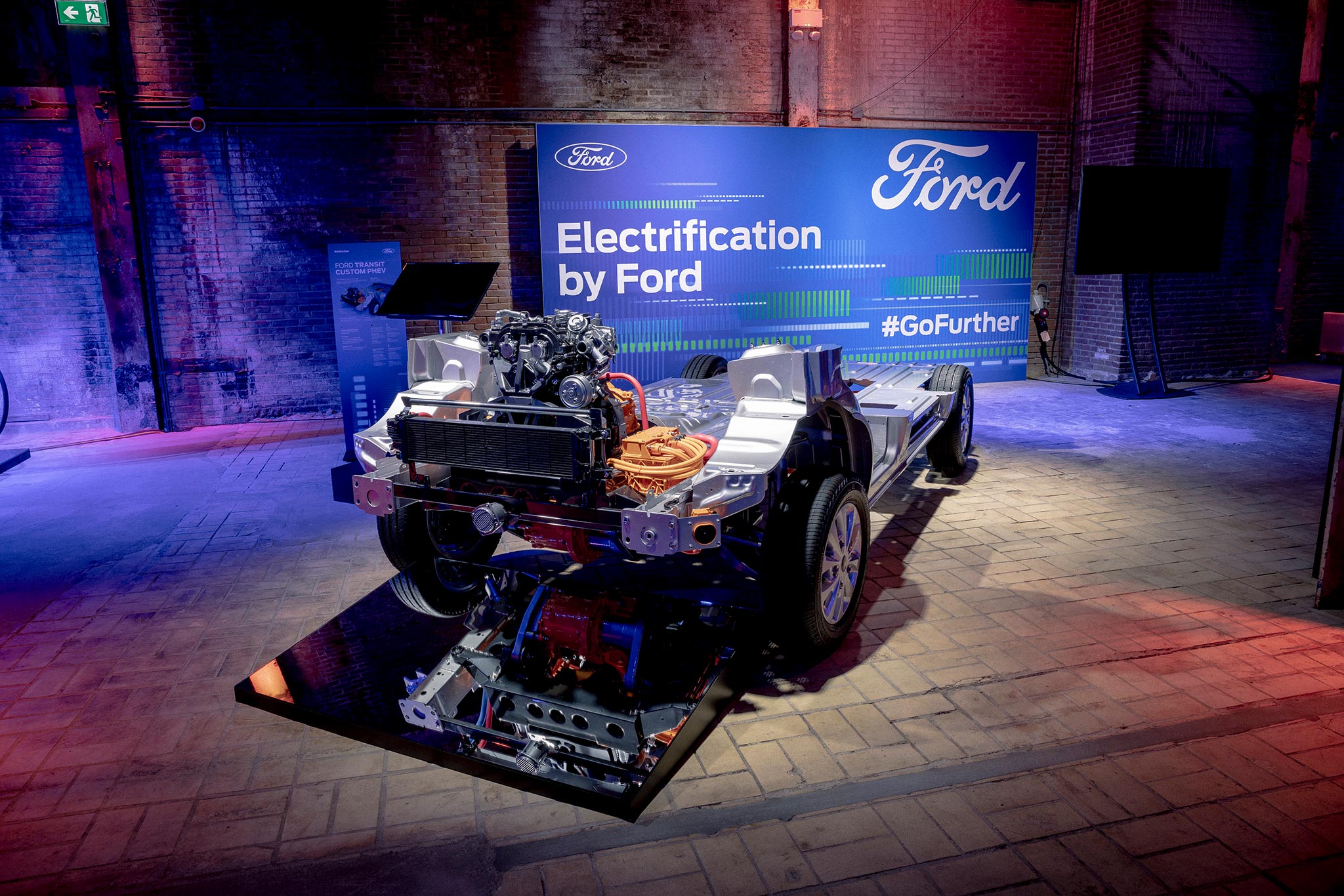
Ford’s electrified vision for Europe includes its Mustang-inspired SUV and a lot of hybrids

Ford of Europe’s vision for electrification includes 16 vehicle models — eight of which will be on the road by the end of this year — the company announced at its Go Further event in Amsterdam.

Those plans include a plug-in hybrid variant of its Kuga SUV, its Mustang-inspired crossover, and a commercial transit van.

Ford’s European electrification strategy is in line with its plans for North America to focus largely on hybrids. For instance, in a separate event on Tuesday Ford took the wraps off its latest generation of the Escape, a 2020 model vehicle for the North American market that is sportier, loaded with technology and, comes with hybrid and electric options.

Last year, Ford ramped up its plans, announcing that it would phase out most cars it sells in North America. Ford will continue to produce the Mustang and focus the rest of its efforts in North America on trucks, utilities and commercial vehicles, as well as a move into electric vehicles.

The operational piece of Ford of Europe’s strategy, which does include a couple of all-electric vehicles in the mix, namely the Mustang-eseque SUV, will be largely led by Stuart Rowley.

Rowley, who took over as vice present and president of the regional outfit on April 1, will be responsible for all operational leadership of the business unit, including acceleration of the European transformation strategy. He reports to Jim Farley, president of Ford Global Markets.

Ford Go Further electric

The majority of the vehicles introduced Tuesday at Ford of Europe’s event are either hybrid or plug-in hybrid vehicles. Two of those vehicles – a plug-in hybrid Explorer SUV and  a new plug-in hybrid Tourneo for the commercial van market – made their global debuts at the Go Further event.

A plug-in hybrid variant of Ford’s new mid-size Kuga SUV, which will have a 31-mile range for the battery piece of the hybrid picture, was also introduced along with new Fiesta EcoBoost Hybrid and Focus EcoBoost Hybrid models that feature mild-hybrid technology for optimized fuel-efficiency.

Ford focused on the commercial end of the market as well, with plans to bring an all-electric Transit van to Europe by 2021. Ford is bringing a plug-in hybrid version of the Transit van to market this year. This plug-in hybrid will have a 13.6 kWh lithium-ion battery pack and Ford’s 1-liter EcoBoost gas engine, which acts as a range extender. The powertrain will have an all-electric (sometimes referred to as a zero-emission driving range) of 31 miles, and a total 310 miles range using the range extender. The vehicle is being trialed in London, with further testing scheduled to start soon in Valencia, Spain, and Cologne, Germany.

The Ford of Europe event confirmed that the often-teased ‘Mustang-inspired’ electric crossover will be more than a North American market. The vehicle, Ford said Tuesday, will be able to travel 600 kilometers, or 370 miles, on a single charge when it comes to market in 2020, an estimate based on European fuel consumption and emissions standard known as WLTP.

The WLTP, or World Harmonised Light Vehicle Test Procedure, is a new standard that is supposed to make European fuel economy labels more realistic. (In the past, ranges in Europe were wildly overstated compared to the more conservative EPA estimates. Vehicles in the U.S. use EPA estimates.

Ford has said it’s targeting a 300-mile range for its electric crossover in the United States.

02 Apr 2019

Andreessen Horowitz isn’t alone in leaving behind VC as we know it — and more company is coming

This morning, Forbes wrote a lengthy profile of Andreessen Horowitz, the now 10-year-old venture firm that its rivals love to hate but nevertheless tend to copy. It’s a great read that revisits some of the firm’s wins and losses and, interestingly, regrets, including the founders’ early predisposition to talk trash about the rest of the venture industry.

As Ben Horowitz tells reporter Alex Konrad, “I kind of regret it, because I feel like I hurt people’s feelings who were perfectly good businesses . . . I went too far.”

The story also suggests that Andreessen Horowitz — whose agency-like model has been widely replicated by other big venture firms — is re-shaping venture capital a second time. It’s doing this, says Forbes, by turning itself into a registered investment advisor.

But the firm isn’t alone is morphing into something very different than it once was, including an RIA. SoftBank is already one. General Catalyst appears to be in the process of registering as one, too. (It recently withdrew its status as a so-called exempt reporting advisor.) Other big firms with a range of un-VC-like products are similarly eyeing the same move.

They don’t have much choice. While VCs have traditionally been able to dabble in new areas through their limited partner agreements with their own investors, they’ve also faced what’s traditionally been a 20 percent cap on these activities, like buying in the public markets, investing in other funds, issuing debt to fund buyouts, and acquiring equity through secondary transactions.

Put another way, 20 percent of their capital could be used to experiment, but the rest had to be funneled into typical venture capital-type deals.

For Andreessen Horowitz, that cap clearly began to grate. An early and enduring believer in crytpocurrencies, marketplaces, and applications, the firm grew particularly frustrated over its inability to invest more of its flagship fund into crypto startups. It raised a separate crypto fund last year so it could move more aggressively on opportunities, but according to Forbes, the constraints that came with creating that separate legal entity gave rise to new aggravations.

By becoming a registered investment advisor, Andreessen Horowitz will no longer have to limit these stakes, including in its general fund — the newest of which it’s expected to announce shortly. It will also have the freedom to invest any percentage of its fund that it wants in larger high-growth companies, to buy shares from founders and early investors, and to trade public stocks, as Forbes notes.

It’s the same reason that SoftBank is a registered investment advisor and other big firms with more assets will invariably be, too. As longtime startup attorney Barry Kramer observes, “Like the now-giant operating companies that VCs once funded, like Google and Apple and Amazon — each of which used to play in discrete market segments and now overlap — hedge funds, mutual funds, secondary funds, and venture funds that used to play in discrete market segments are starting to overlap, too.”

In fact, the opportunity to shop for secondary stakes alone could drive a venture firm to restructure. “Secondary markets are eating” the public markets, says Barrett Cohn on the investment bank Scenic Advisement, which helps broker sales between equity buyers and sellers. Cohn has a vested interest in this happening, but it’s also hard to argue he’s wrong, considering how long startups remain private, and how much more secondary activity now takes place before they’re acquired, go public, or conk out.

Little wonder the powerful venture capital lobby group — the National Venture Capital Association — has been trying to talk the SEC into changing its definition of what constitutes a venture capital firm. It recognizes that it’s going to begin losing more and more members if venture firms aren’t afforded more flexibility.

In the meantime, becoming an RIA isn’t without its downsides — a lot of them, notes Bob Raynard, the managing director of the fund administration services company Standish Management in San Francisco. Though he thinks many firms like Andreessen Horowitz may not have a choice at a certain point (“I think there are a lot of other growth equity and venture firms that should be registered for their own sake”), the new rules to which it will be adapting can “be quite onerous” beginning with a complete lack of privacy, as well as expenses. One estimate we found suggests that the median annual compliance costs are eight times higher for RIA than for exempt registered advisors, or an estimated $405,000 versus $50,000 annually.

“If [Andreessen Horowitz] is becoming an RIA, it cost structure just went way up,” says Raynard, observing that a compliance officer will have to sign off on everything an employee at the firm does, as well as the investing decisions that its partners’ spouses, children, and even parents make. “As a VC, you don’t have to report your trades,” Raynard notes, but an RIA has to ensure that nothing and no one with a pecuniary interest in the firm creates an expensive misstep.

One could also imagine it creating headaches for limited partners, who typically like to invest in distinct asset classes, whether venture capital or private equity or hedge funds. If Andreessen Horowitz, among other firms, starts to look like an amalgamation of all three, how are they viewed? In what bucket do they land?

The firm declined to answer that question and others of ours today, saying it’s focused for now on completing the process of registering as an RIA, but Raynard pushes back on the idea that its new look might throw off the institutions that have long funded it. “I think regulators will view it as a good thing, and I think most LPs would view it as a favorable shift, because of increased outside scrutiny involved.”

He thinks that beyond the loss of privacy and expenses and the eagle-eyed SEC watching more closely, a bigger trade-off as venture firms become, well, investment firms more broadly, could be that it grows harder to recruit.

“If you’re a junior-level person and you’re being recruited by a firm that’s a registered investment advisor versus a venture firm where your deals are not being scrutinized and you have some privacy,” says Raynard, “it’s something you’re going to think about.”

02 Apr 2019

Ford is bringing an electric Transit van to Europe by 2021

Ford plans to bring an electric Transit commercial van to the European market by 2021, as part of the automaker’s broader plan to electrify its global portfolio.

The automaker announced the Transit EV, along with more than a dozen other electrified consumer-facing models that will be part of its European portfolio, at its Go Further event in Amsterdam on Tuesday.

Ford didn’t provide many other details on the Transit van. And for now, the EV commercial van is only slated for Europe. Ford’s focus on Europe makes sense, considering its sales record in the region. Ford sold 380,900 commercial vehicles in its European 20 markets last year, up more than 8 percent compared with 2017.

The company did say the commercial van is be “designed to address the needs of businesses for a practical and versatile load-carrier with zero-emission driving capability for urban applications.” That type of language suggests a city-focused vehicle that might have a mid-200-mile range. The all-electric Transit will be available in multiple body styles, Ford said.

Ford made several other commercial vehicle-related announcements on Tuesday, including the introduction of in its new Tourneo Custom Plug-In Hybrid that can seat people and will be available to European customers beginning in late 2019.

One of the more interesting pieces of commercial news is Ford’s new initiative to target 100 percent uptime for commercial vehicle operators. Ford plans to hit that target via a usage-based maintenance program that will be powered by a new app called FordPass Pro that was previewed at the event.

FordPass Pro app, which will be launched later this year, is specifically designed to support smaller firms and owner drivers to maximize their productivity.

“Commercial customers need smarter, more integrated solutions, built around a connected business environment,” said Hans Schep, general manager of commercial vehicles at Ford of Europe.

Ford also unveiled a Transit Smart Energy Concept, a 10-seater minibus. The concept, which has about 93 miles of driving range from a 4-hour charge, was developed by engineers at Ford’s Merkenich Technical Center in Germany. The concept uses a Ford Transit chassis fitted with the same battery-electric drivetrain technology as the StreetScooter WORK XL. StreetScooter is the company behind DeutschePost DHL electric vans.

Ford is working other iterations of the concept minibus that increase energy savings and extend battery-electric driving range, including features that would allow the driver to control heating and cooling of individual seats – and deactivation of unoccupied seats.

Ford says road trials with the Transit Smart Energy Concept are expected to begin later this year, after completing wind-tunnel tests. Ford engineers will take what they learn from these trials and future versions of the concept and eventually apply its range-extending features to volume production vehicles.

02 Apr 2019

India’s satellite destruction test put 400 pieces of debris into unknown orbits, claims NASA

India’s recent demonstration of its orbital defense capabilities scattered more than 400 pieces into various orbits, endangering the International Space Station and other emplacements, according to NASA Administrator Jim Bridenstine. He called the test a “terrible, terrible thing” at a town hall event yesterday.

The test, which took place last week, saw an Indian rocket launched to an altitude of about 300 kilometers, where it struck and destroyed a previously placed satellite, probably the Microsat R launched in January. Prime Minister Narenda Modi proudly said the test “shows the remarkable dexterity of India’s outstanding scientists and the success of our space programme.”

Reaction from space concerns around the world has not been so warm, with some decrying the act as a step towards the militarization of space, and others, like Bridenstine, offering a more practical warning.

“Intentionally creating orbital debris fields is not compatible with human spaceflight,” he said.

“We have identified 400 pieces of orbital debris from that one event. What we are tracking right now, objects big enough to track, we’re talking about 10 centimeters or bigger, about 60 pieces have been tracked. Of those 60, we know that 24 of them are going above the apogee of the International Space Station.”

Although most of these pieces will soon burn up in the atmosphere, and the larger ones could be tracked and avoided if necessary, the whole thing sets a bad precedent, Bridenstine suggested: “When one country does it, then other countries feel like they have to do it, as well.”

It must be said that it was for this precise reason — that U.S., Russia, and China had already done it, as late as 2008 — that India chose to do it. So we have some share of the responsibility here. But we can all agree that sending debris into an orbit where it can conceivably endanger the ISS is just plain a bad idea.

An ISRO advisor, Tapan Misran, told the Indian Express the debris should all be gone in six months, and that the mission had been calculated carefully so as not to create any real risk. He also pointed out that a similar Chinese interception mission, because it took place at nearly three times the altitude, created numerous objects that are still being tracked years later.

Orbital debris is a serious problem that will only get worse as launches multiply, though some companies, like Rocket Lab, are taking a proactive stance on it. It’s gotten to the point where we’re designing space harpoons to spear and collect it. Cool in theory, but let’s hope it doesn’t become necessary.

02 Apr 2019

BuzzFeed teams up with Eko to create interactive recipes and other videos

BuzzFeed and Eko have been working together to create a wide range of interactive videos, and they began launching in the past week or so — starting with this Tasty potato recipe that allows you to customize your ingredients, revealing a bit about your personality in the process.

There’s also an interactive Tarot reading, a video quiz that determines what kind of dog you are and this customizable ramen video.

I spoke with BuzzFeed and Eko executives last week to learn more about how they’re working together, and where it might go next.

These videos feel pretty different from previous uses of Eko technology like “That Moment When,” which is more of a comedic, Choose Your Own Adventure-style story.

Eko’s Chief Creative Officer Alon Benari acknowledged that in the past, the company usually “started from a traditional video and injected interactivity into it.” But while “this is one of first projects where we did the other path” – namely, taking an interactive format like a quiz and introducing video — the focus is still on “bringing together the best of both worlds.”

“This isn’t a direction change,” added Vice President of Business Development Ivy Sheibar. “We have a full pipeline of what you would consider coming more from traditional video.”

As for BuzzFeed, Chief Marketing Officer Ben Kaufman suggested that this is a natural extension of the publisher’s strategy to experiment with new formats. By offering this kind of interactivity, BuzzFeed can tailor videos to their viewers’ needs and interests (for example, by customizing video recipes based on dietary restrictions)  while also “allowing our audience to engage with our videos and create data feedback loops.”

In addition to providing the technical platform to create these videos, Kaufman said Eko’s team also shared important insights from years of experience with interactivity.

“One of the things they trained us on was what the meaning of a meaningful choice was — [a choice] where actually as an audience member you would take that to heart and makes you feel like, ‘This video is really made for me,'” he said.

Kaufman added that as BuzzFeed and Eko continue rolling out different types of interactive videos, “Our goal in the next few weeks is to crack this, to build a real deep audience connection, see what they are loving and go heavy into scaling that.”

02 Apr 2019

Foursnap? Snapchat tries “Status” location checkins

Today’s teens missed the Foursquare era so Snapchat is giving them another shot with a new feature to aid in-person meetups. Snapchat is now testing Status, an option to share to the Snap Map a Bitmoji depicting what you’re up to at a certain place. You could show your little avatar playing video games, watching TV, asking friends to hit you up, and more. And Snapchat will compile these into a private diary of what you’ve been doing called Passport

This fixes the biggest problem with Snap Map and many other location checkin apps. Just because someone is down the street doesn’t mean they want you to drop in on them. They could working, in a meeting, or on a date. Snapchat Status lets people convey their activity and intention so you can tell the difference between “I’m nearby but stuck with my parents” and “I’m nearby and want to hang out!” As Snapchat refocuses on messaging after Instagram stole its Stories thunder, Status could ensure there’s more to see that makes Snap Map worth opening.

Snapchat Status and Passport were first spotted by reverse engineering expert and frequent TechCrunch tipster Jane Manchun Wong. “Share the Moment with Status” the introduction to the feature explains. “You can now share where you are or what you’re up to. Your Status will only be visible to friends you share your location with.” To se your status, you choose from reams of poses for your Bitmoji ranging from them reading a book to holding a sign saying “text me?”

Meanwhile, “Passport is Just For You: Passport helps you keep track of the Places you’ve been. Places you set your Status at will be added to your Passport along with who you were there with. Only you ca see your Passport, and you can delete a Place from your history at any time.” Your Status only lasts until you leave a place, but it’s tallied along with the number of countries and cities you’ve check into on your Passport.

A Snap spokesperson confirms that “Yes, we are currently testing new ways for Snapchatters to better communicate on the Snap Map with their friends. This test is running with a percentage of Snapchatters in Australia.” Previously, special Bitmoji were only displayed on the Snap Map involuntarily, like when you were road tripping or flying to a new place; visited somewhere special like a beach, mall, or major event; or if there was a breaking news moment.

If you don’t want to use Status or even show up on Snap Map, you can go into ghost mode at any time, plus all your location-based content disappears if you don’t open the app for eight hours. And if you do want to be found, you can check who’s viewed your location or Status in case you need to know who’s blowing you off.

Snap launched Snap Map back in June 2017, basing the idea off its acquisition of French location startup Zenly that it bought for $213 million in cash plus bonuses. Beyond spurring real world interaction, Snap has also made Snap Map an embeddable way to explore breaking news events or hotspots around the world. Status could provide structured data about your behavior which could beef up Snapchat’s scrawny repository of ad targeting information. The app could even try surfacing nearby businesses or discounts.

Snapchat’s tighter-knit social graph and stronger track record on privacy lets it offer features that would freak people out if built by Mark Zuckerberg. Given Facebook is aggressively cloning Snap’s whole product philosophy from its direct copy of Stories to ephemeral messaging to its premium content hubs Watch and IGTV, Snapchat desperately needs to differentiate. Luckily, Facebook has failed to figure out offline meetups, and has yet to roll out the “Your Emoji” status feature that similarly tries to convey what you’re up to visually but within Messenger instead of a map.

Doubling down on Snap Map is a smart move because its one of the few areas where Facebook can’t follow.

02 Apr 2019

iPhones get a price drop in China

Apple this week lowered the price on a number key hardware lines in China, including AirPods, Macs, iPads and, most notably, the iPhone. The move, noted by CNBC, is believed to be the direct results of a three-percent tax cut that took effect in the country yesterday.

In many cases, however, the impacted product have dropped by even more, including a 500 yuan ($74) price cut to the iPhone XS, marking a nearly six-percent drop for the company’s latest flagship.

Along with an adjustment for tax rates, the drop is likely also due, in part, to a lagging demand for products like the iPhone in the world’s largest smartphone market. Early this year, Apple blamed lower than expected earnings on weak demand for the iPhone in China.

The handset’s revenue dropped 15-percent year-over-year in Q1, with China taking center stage. Among the factors are slowed economic growth in the country and flagging global smartphone sales, as users upgrade their devices less frequently.

Apple is also facing increased global competition from Chinese manufacturers like Huawei, which has quickly been rising the sales ranks to be a top competitor alongside the iPhone and Samsung devices.

02 Apr 2019

Green New Deal doesn’t go far enough

The Green New Deal brings much-needed urgency to the national conversation around the climate crisis, which is without a doubt the biggest threat to life on this planet. The recent resolution introduced into Congress by Rep. Alexandria Ocasio-Cortez and Sen. Ed Markey rightly calls for a significant overhaul of our economic system that would drastically reduce greenhouse gas emissions and pollution, alongside a Just Transition framework that would create high-quality jobs while correcting historical racial and economic injustices.

While I applaud the direction proposed in the Green New Deal resolution, it simply does not go far enough. The hard truth is that we must keep more fossil fuels in the ground. Not only that, we must redouble our efforts to keep forests standing — a critical yet oft-overlooked factor in the only promising equations to stop climate catastrophe.

There are two promising paths toward a solution: cut off the billions of dollars still flowing into fossil fuel extraction and expansion; and strengthen the rights of indigenous and frontline communities, which has consistently been proven to be one of the most efficient ways to properly manage forests and natural resources.

On October 8, 2018, the UN Intergovernmental Panel on Climate Change’s (IPCC) report was released — and it did not pull any punches. The report clearly states that if global temperatures rise by 1.5° Celsius, the impacts will be much worse than previously predicted. The report also said that to have a reasonable chance of staying under 1.5° we must immediately embark on an unprecedented global effort to reshape our economic priorities over the next 12 years. As the biggest carbon polluter in history, the U.S. largely owns this problem — therefore we must lead in the solution.

If you’re in a hole and you want to get out, stop digging.

Regrettably, recent remarks by Senator Feinstein and House Speaker Pelosi dismissing the Green New Deal show that even those often considered allies in the fight against catastrophic climate change are unwilling to marry urgency with action. “If we wait until 2050 to make change, then our Earth is going to die. We will quite literally have an apocalypse,” said 16-year-old Isha Clarke, one of the youths who confronted Sen. Feinstein asking for her support of a Green New Deal. The bottom line is that we need politicians to stand up and fight back against the corporate special interest groups that are compromising our future.

The science is clear. Emissions just from the oil, gas and coal reserves already in production would take the world well beyond 1.5° Celsius. And standing forests, particularly tropical forests, are under constant threat of destruction for profit — despite the fact that they are some of the best protection against climate change that we have (intact forests act as critical carbon sinks, keeping carbon out of our atmosphere).

If you’re in a hole and you want to get out, stop digging. We need an immediate end to the expansion of fossil fuel extraction and infrastructure and an end to deforestation. In-depth research makes clear that Wall Street banks, insurance companies and other financiers continue to pump trillions of dollars into the same companies that have been shamelessly profiting off climate destruction for decades.

The Green New Deal calls for “achiev[ing] net-zero greenhouse gas emissions” through measures that include “meeting 100 percent of the power demand in the U.S. through clean, renewable, and zero-emission energy sources” within 10 years, and restoring and protecting natural ecosystems that would remove greenhouse gases from the atmosphere, support climate resiliency, and enhance biodiversity. The resolution requires “obtaining the free, prior, and informed consent of indigenous peoples for all decisions that affect indigenous peoples and their traditional territories, honoring all treaties and agreements with indigenous peoples, and protecting and enforcing the sovereignty and land rights of indigenous peoples.” This is a solid start to this very necessary conversation.

However, “net zero” could imply a continuation of fossil fuel production and use. For example, if corporations are allowed to cancel out their emissions with wrongheaded geoengineering schemes and tradeable carbon offsets, we will be in the same hole. Without an explicit commitment to keep fossil fuels in the ground, the resolution as currently written falls short.

Achieving the goals of the Green New Deal must also go hand in hand with transforming the financial sector. Banks like JPMorgan Chase must no longer be allowed to profit from financing the construction of tar sands pipelines and the destruction of rainforests for palm oil, endangering the livelihoods of indigenous communities in its wake. They need to be held accountable for the damage done to people and the planet. And they need to rapidly shift their financing to solar and wind power; energy storage and grid modernization; electrification of transport, heating and industrial processes; and energy efficiency, which are all key technologies in achieving the goals of the Green New Deal.